Understanding what tyre labels mean is essential for every driver in the UK. Whether you are replacing worn tyres, switching between seasonal options, or trying to improve fuel efficiency, tyre labels provide vital information that helps you make safer, more economical, and environmentally responsible choices.
This tyre label explanation will guide you through every element of the label so you can confidently choose the right tyres for your vehicle and driving conditions.
Table of Contents – Tyre Label Explanation
Introduction to Tyre Labels
Tyre labels were introduced to give drivers clear, standardised information about tyre performance. Similar to energy labels on household appliances, tyre labels help you compare products quickly and objectively. They focus on three key areas: fuel efficiency, wet grip, and noise emissions, all of which directly affect safety, running costs, and driving comfort.
At Falcon Mobile Tyres, we regularly help customers understand tyre labels when fitting new tyres at home or roadside, ensuring they get the best option for their needs.
Where Will I See a Tyre Label When Buying Car Tyres?
You will typically see tyre labels displayed:
- On tyres in-store
- On online tyre listings
- On manufacturer specification sheets
When using a mobile tyre fitting service, technicians can also explain tyre label meanings before fitting, helping you make an informed decision on the spot.
Importance of Understanding Tyre Labels
Many drivers focus only on tyre size or brand, but the tyre label provides insights that directly impact:
- Fuel economy and running costs
- Braking performance in wet conditions
- Road noise and driving comfort
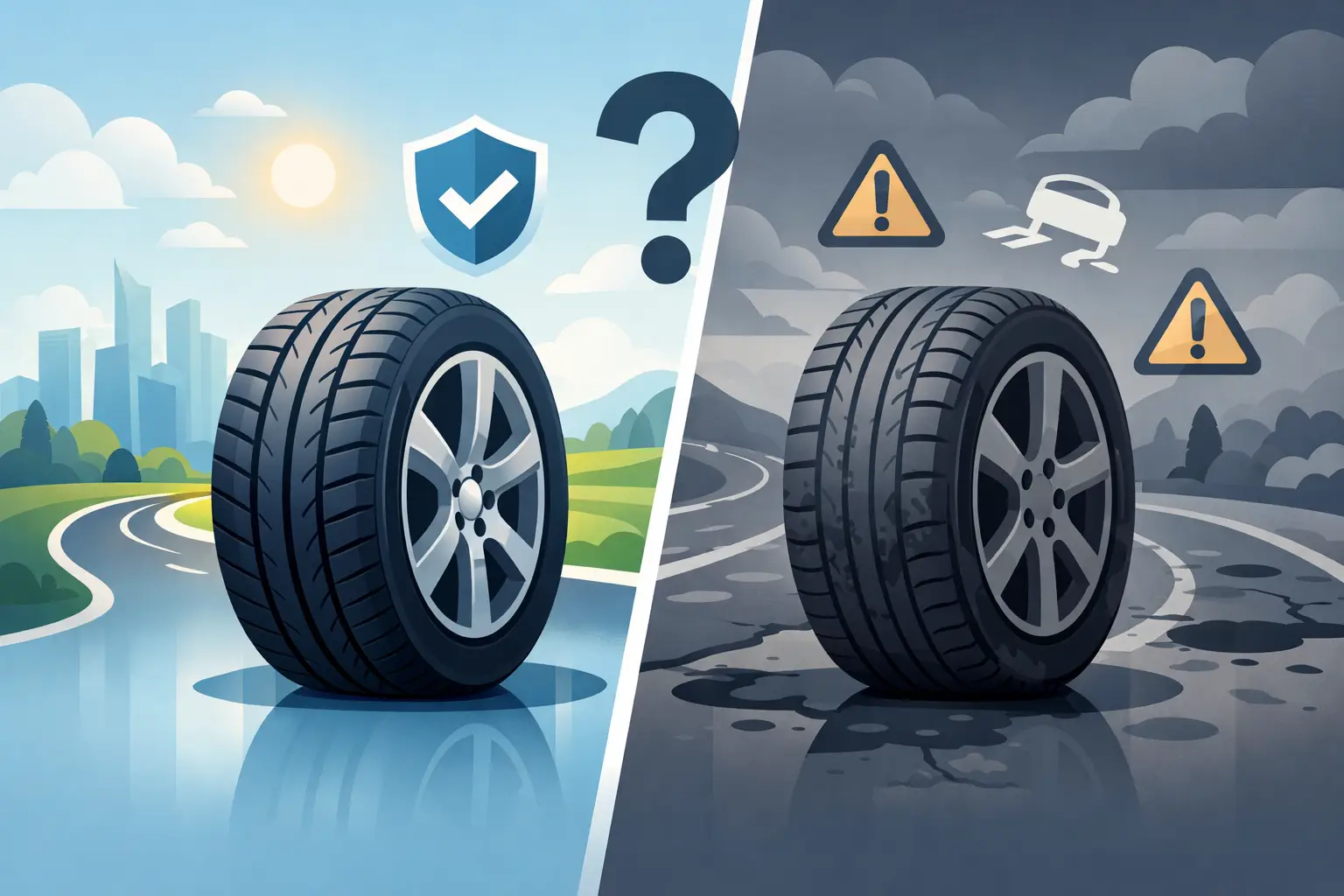
Understanding tyre labels means safer driving, lower fuel consumption, and fewer unpleasant surprises on the road.
Fuel Economy and Rolling Resistance
Tyre Efficiency Rating
Fuel efficiency on the tyre label is determined by rolling resistance, which measures how much energy a tyre loses as it rolls. Lower rolling resistance means:
- Better fuel economy
- Reduced CO₂ emissions
- Lower long-term running costs
Tyres are graded from A (most efficient) to E (least efficient). Choosing tyres with a higher tyre efficiency rating can significantly reduce fuel usage over time, especially for high-mileage drivers.
This is particularly relevant if you rely on your vehicle daily or frequently use motorway driving.
Breakdown of the EU Tyre Label
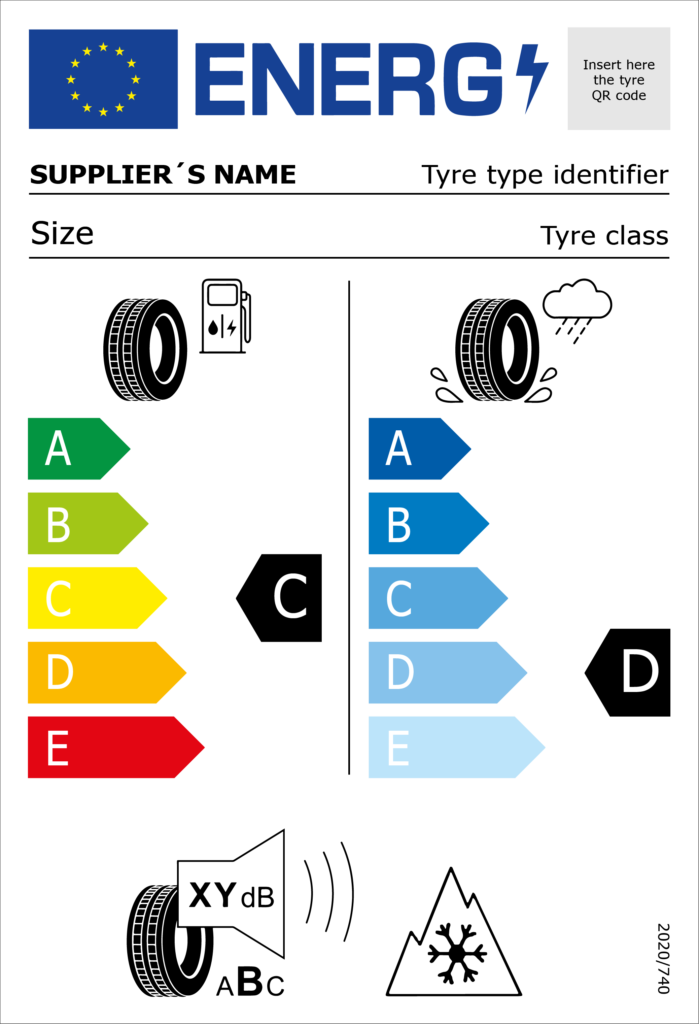
The EU tyre label explanation focuses on three core performance categories.
Fuel Efficiency Section
This section shows how the tyre affects fuel consumption. A difference of just one rating can improve fuel economy by several percentage points, which adds up over the life of the tyre.
Wet Grip Section
Wet grip is one of the most important safety ratings. It indicates how well a tyre performs when braking on wet roads.
- Rated from A (shortest braking distance) to E
- Directly affects stopping distance and accident risk
This rating is crucial in the UK, where wet road conditions are common year-round.
Noise Emission Section
This part shows how loud the tyre is when driving, measured in decibels (dB).
- Fewer sound waves = quieter tyre
- Lower noise improves driving comfort and reduces environmental noise pollution
UK Tyre Laws and Labelling
In the UK, tyres must meet legal standards for tread depth and condition, but tyre labels go further by helping drivers exceed the minimum requirements. While labels are not a legal requirement for vehicle safety checks, choosing tyres with strong safety ratings can reduce the risk of accidents and tyre-related breakdowns.
If you experience issues such as rapid air loss or damage, services like puncture repair or emergency tyre replacement may be required regardless of the tyre label.
Interpreting Tyre Label Meaning
How to Read the Labels
Start by prioritising what matters most for your driving:
- High mileage drivers → fuel efficiency
- Urban or motorway driving → low noise
- Wet or winter conditions → wet grip and seasonal suitability
Balancing all three factors leads to the best overall performance.
Common Misconceptions
A common myth is that the highest-rated tyre is always the best choice. In reality:
- An ultra-efficient tyre may sacrifice grip
- A high-grip tyre may increase fuel consumption
The best tyre depends on your driving habits and conditions.
Winter vs Summer Tyre Label Explanation
Tyre labels also apply to winter vs summer tyres, but performance should be interpreted differently:
- Winter tyres prioritise grip in cold, icy, and snowy conditions
- Summer tyres perform best in warmer temperatures
Winter tyres may show higher rolling resistance, but they offer superior safety in cold weather. For drivers who want flexibility, all-season tyres combine elements of both, though with some compromise.
Falcon Mobile Tyres regularly advises customers on seasonal tyre changes and can fit winter or summer tyres at your location.
Tyre Labels and Environmental Impact
Eco-friendly tyres are designed to reduce fuel consumption and emissions. Tyre labels help identify these by highlighting:
- Low rolling resistance
- Reduced noise pollution
- Improved sustainability
Choosing tyres with better environmental ratings supports greener driving without sacrificing safety.
Safety Ratings Explained
Safety ratings, especially wet grip, directly influence:
- Braking distance
- Vehicle stability
- Driver confidence
A tyre with a higher wet grip rating can stop several metres sooner than a lower-rated tyre—often the difference between a near-miss and a collision.
Tips for Reading Tyre Labels Effectively
- Compare labels across multiple brands
- Consider your driving environment and mileage
- Balance fuel economy with safety
- Ask a professional if unsure
When booking Falcon Mobile tyre fitting, technicians can help interpret tyre labels before installation, ensuring the best match for your vehicle.
Falcon Mobile Tyres’ Tyre Label Explanation
Understanding tyre labels empowers you to make smarter decisions about safety, efficiency, and environmental impact. This tyre label explanation shows that tyres are not just rubber on wheels—they are a critical safety component that affects every journey.
By paying attention to rolling resistance, fuel economy, safety ratings, and noise emissions, you can select tyres that suit your driving style and conditions. Whether you need new tyres fitted at home, roadside assistance, or advice on seasonal changes, Falcon Mobile Tyres is here to help you stay safe and confident on the road.