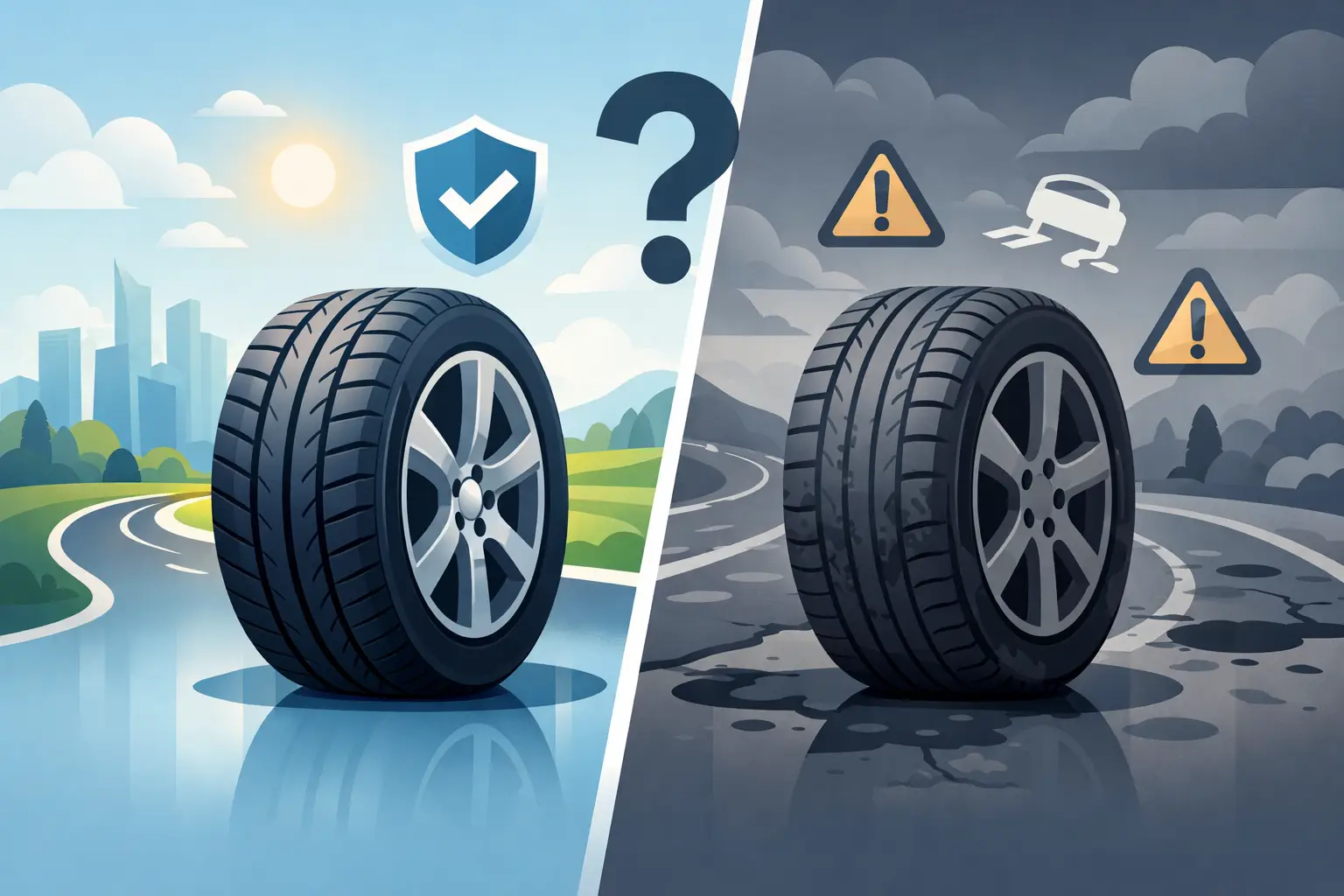

A city tyre does far more stopping and starting than a motorway tyre. It deals with speed humps, potholes, kerbs, wet crossings, tight parking spaces and short journeys where the rubber rarely gets a long, easy run. The best tyres for city driving are not necessarily the most expensive ones. They are tyres that suit your vehicle, give dependable wet grip and cope well with the daily punishment of urban roads.
For drivers across South East London and Kent, the right choice usually comes down to safety, comfort, durability and value. If a tyre is worn, damaged or losing pressure, choosing the right replacement quickly can make the difference between getting on with your day and being stuck at the roadside.
What city driving demands from your tyres
Urban roads place different demands on tyres than regular long-distance driving. You may only cover a few miles at a time, but those miles involve frequent braking, steering and pulling away. This creates wear around the tyre shoulders and puts extra stress on the casing, especially when roads are uneven.
Wet-weather confidence should be near the top of the list. London and Kent roads can become slippery quickly after rain, particularly where oil, dust and leaves have built up. A tyre with strong wet grip helps your car stop more effectively and gives better control through roundabouts, junctions and busy traffic.
Comfort matters too. A tyre with a sensible sidewall and a well-designed tread can reduce harshness from broken road surfaces. Very low-profile tyres may look sharp, but they offer less protection against pothole damage and can make the ride noticeably firmer. For a daily commuter or family car, a little extra sidewall is often the more practical choice.
Best tyres for city driving: what to look for
There is no single tyre that suits every car, van or driver. The right option must match the tyre size, load rating and speed rating specified for your vehicle. Once those essentials are covered, focus on how and where you actually drive.
Prioritise wet grip
For city use, reliable wet braking is often more valuable than chasing the lowest possible fuel consumption figure. Look at the wet-grip rating on the tyre label, but treat it as one part of the decision rather than the whole answer. The label does not tell you how a tyre will feel after thousands of miles, how well it resists pothole damage or how it performs in deeper standing water.
A quality premium or mid-range tyre with a proven wet-weather design is usually a sensible investment for drivers who commute, carry children or regularly use busy local roads. Budget tyres can be suitable for low-mileage cars, but the cheapest option is not always the best value if it wears quickly or offers reduced confidence in the rain.
Choose durability for stop-start roads
City driving wears tyres differently. Constant acceleration and braking can wear the driven tyres faster, while frequent tight turns and parking manoeuvres can scrub the outer edges. A tyre designed for everyday touring and commuting generally offers a better balance than a tyre built purely for high-speed performance.
If you drive a van, carry tools or make deliveries, load capacity is just as important as tread design. Fit tyres with the correct load rating for the vehicle and the work it does. An overloaded or incorrectly rated tyre runs hotter, wears faster and is more likely to fail.
Do not overlook road noise and ride comfort
Tyre noise is more noticeable when you spend your day in slow-moving traffic with the windows up. A quieter tyre can make daily driving less tiring, especially in electric and hybrid vehicles where there is less engine noise to mask road sound.
That said, do not choose based on noise alone. A tyre that is slightly quieter on paper may not be the best choice if it compromises wet grip, load capability or durability. The aim is a practical balance that suits your vehicle and budget.
Pick the right seasonal option
For most drivers in South East London and Kent, good-quality summer tyres are suitable all year when temperatures are generally mild and winter weather is limited. They are designed to work well in wet conditions and offer good performance through the warmer months.
All-season tyres can be a strong option if you rely on your car every day, travel early in the morning or regularly head into colder rural areas. They provide more flexibility in low temperatures and light snow, although they may not match a dedicated summer tyre for sharp handling in warm weather or a winter tyre in severe snow.
Winter tyres are most useful for drivers who must travel in prolonged cold, snow or icy conditions. For mainly urban use in this part of the country, they are not always necessary. It depends on your routes, your work commitments and whether you can leave the car parked during poor weather.
Avoid fitting tyres just because they are cheap
Tyres are one of the few parts of your vehicle that directly connect it to the road. Saving a small amount on a poor-quality replacement can cost more later through faster wear, reduced grip or damage from ordinary road hazards.
A better approach is to choose the best tyre available within a realistic budget. Mid-range tyres are often a sensible middle ground for everyday city drivers. They can offer dependable safety and mileage without the price of top-end performance models. Premium tyres may make sense if you cover high mileage, drive a heavier SUV or want the strongest possible wet-weather performance.
Always avoid mixing tyre types across the same axle where possible. Different tread patterns, grip levels and wear rates can affect how predictably the vehicle handles. If one tyre needs replacing and its matching tyre is already significantly worn, replacing both on that axle may be the safer long-term decision.
The tyre size on your car is there for a reason
It can be tempting to fit a different size because it appears cheaper or is readily available. That can lead to problems with handling, speedometer accuracy, clearance and insurance. Use the size shown on your existing tyre sidewall or in your vehicle handbook, then confirm that the replacement has the correct load and speed rating.
The sidewall will show a code such as 205/55 R16 91V. This refers to the width, profile, construction, wheel diameter, load index and speed rating. If those numbers are unclear, a technician can check the correct specification before fitting. It is always better to confirm than to guess.
City tyre problems that need prompt attention
Potholes, kerbs and debris can damage tyres without causing an immediate blowout. Check your tyres regularly, especially if you have hit a pothole hard or noticed a sudden change in steering or ride quality. A bulge in the sidewall, a cut deep enough to expose internal material, repeated pressure loss or visible cracking means the tyre needs professional inspection.
Do not keep driving on a tyre that is flat or severely under-inflated. Even a short distance can damage the sidewall beyond repair. If you have a puncture, pull over safely when possible and arrange help rather than risking further damage to the tyre and wheel.
Tread depth is equally important. The legal minimum is 1.6mm across the central three-quarters of the tread, around the full circumference. Waiting until the legal limit is reached is not ideal for regular city driving, particularly in wet weather. Replacing tyres earlier gives you more water clearance and better braking confidence when roads are greasy.
Keep new tyres performing properly
The best tyres will not perform as intended if pressures are wrong or wheel alignment is out. Check tyre pressures at least once a month and before longer journeys, using the vehicle manufacturer’s recommended figures. Check them when the tyres are cold.
If one edge of a tyre is wearing faster than the other, or your steering wheel sits off-centre, have the alignment checked. Potholes and kerb impacts can knock alignment out without making the car feel dramatically different at first. Correcting it early protects your new tyres and improves handling.
For fast, practical support at home, work or roadside, Falcon Mobile Tyres Fitting can help with replacement tyres, punctures and tyre checks across South East London and Kent. Call us now when a damaged or worn tyre is holding up your day. Choosing a tyre that matches your driving, then fitting it before a small issue becomes a roadside emergency, is the simplest way to stay moving safely.