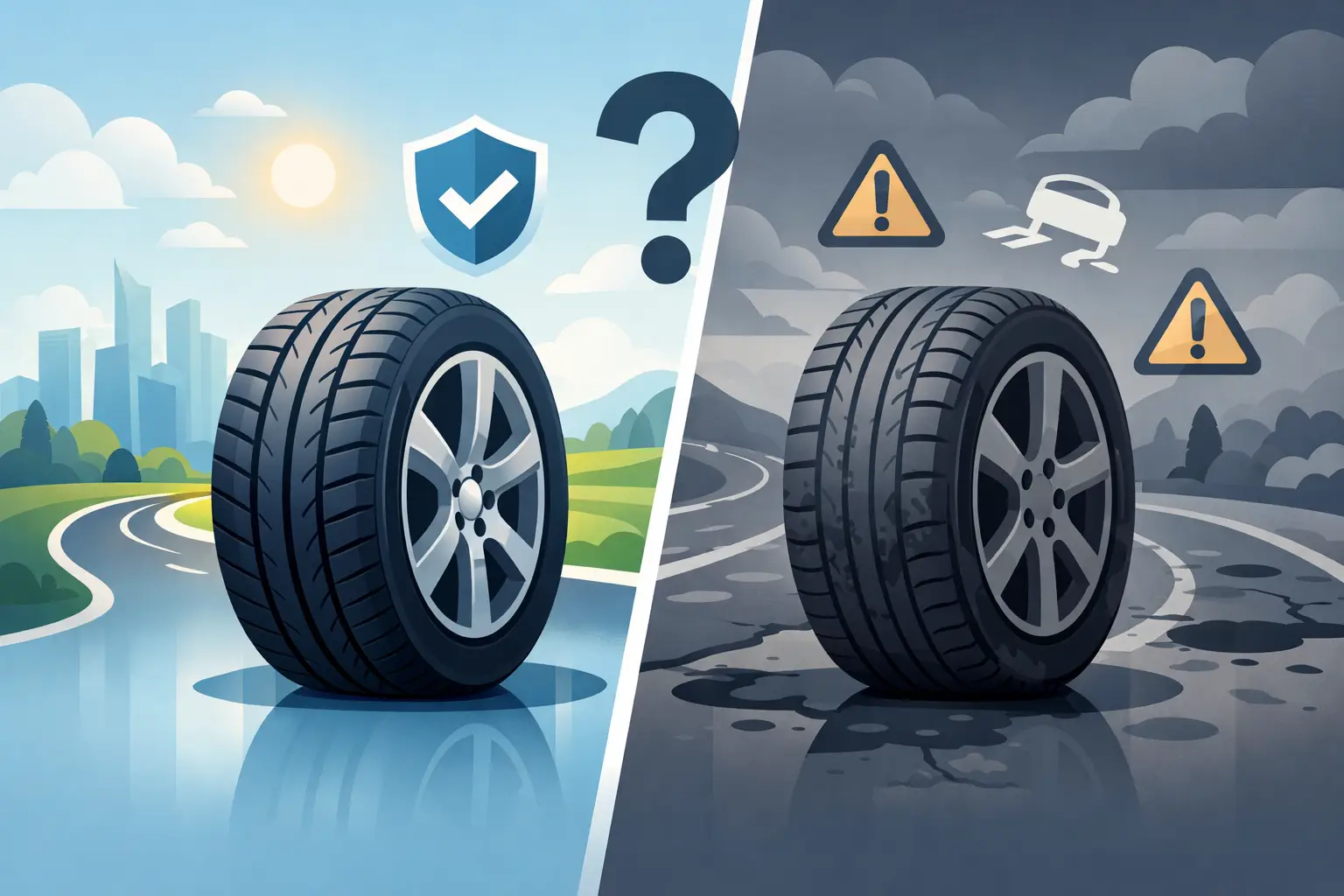
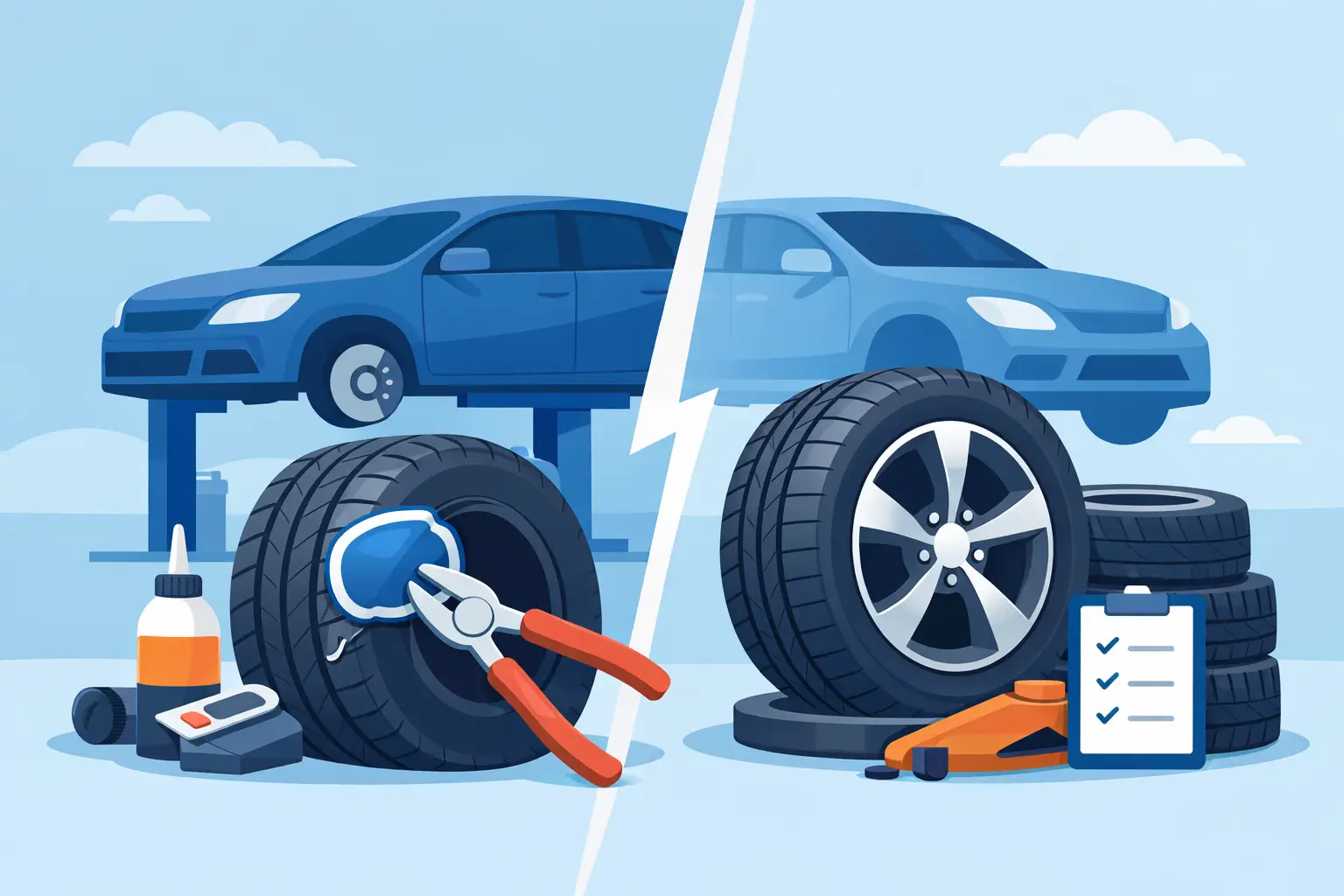
A flat tyre can stop a commute, delay a job or leave the family stranded at the worst possible time. The right answer to tyre repair vs replacement is not simply about choosing the cheaper option. It depends on where the damage is, how the tyre has been driven and whether it can safely return to the road.
A professional inspection takes minutes and can prevent a risky decision. If you are parked at home, at work or stuck roadside in South East London or Kent, mobile tyre support means the problem can be assessed where you are, without waiting around for a garage appointment.
Tyre repair vs replacement: start with the damage
A puncture in the main tread area may often be repairable, particularly when it has been caused by a nail or screw and the tyre has not been driven while flat. In this situation, a technician can remove the tyre, inspect it internally and confirm whether a permanent repair is suitable.
The location of the puncture matters as much as its size. The central tread is the strongest working area of the tyre. Damage close to the shoulder or sidewall is much more serious because these areas flex constantly as you drive. A sidewall puncture, cut or tear cannot normally be repaired safely. Replacement is the correct option.
It is also not enough for a tyre to appear repairable from the outside. Driving even a short distance on a deflated tyre can damage its inner structure. Heat and pressure can break down the reinforcing layers, leaving damage that is not visible until the tyre is removed from the wheel. This is why a quick roadside plug is not a proper answer to every puncture.
A safe repair requires a full inspection and a repair that meets the appropriate standard. If there is any doubt about the tyre’s condition, fitting a replacement is the safer call.
When a repair is usually possible
A repair may be suitable where the puncture is in the repairable tread zone, the hole is small, the tyre retains a sound internal structure and there is enough legal, even tread remaining. The tyre must also be free from previous damage that could compromise its strength.
For many drivers, this is the best outcome. A proper repair costs less than a new tyre, reduces waste and gets you moving again quickly. But it only makes sense when the tyre is genuinely safe to repair. Saving money on a repair is never worth it if the tyre is already weakened.
When replacement is the only safe option
Replacement is normally needed if the sidewall is damaged, the tyre has a bulge, the cords are exposed or the tread is worn below the legal limit. The legal minimum tread depth is 1.6mm across the central three-quarters of the tyre, around its full circumference. In wet conditions, many drivers choose replacement sooner because grip and braking performance reduce significantly as tread wears down.
A new tyre is also likely to be required if the vehicle has been driven on the rim, the puncture is too large, or the tyre has multiple repairs or repeated damage in the same area. Cracking caused by age, poor storage or prolonged exposure to the elements is another warning sign. A tyre can still hold air and look acceptable at a glance while no longer being dependable at motorway speeds.
Run-flat tyres need particular care. Some can be driven for a limited distance after pressure loss, but this does not guarantee they can be repaired afterwards. The decision depends on the tyre manufacturer’s guidance, how far it was driven and what an internal inspection reveals.
Tyre repair vs replacement costs: look beyond today
A repair is usually the lower-cost option when it is safe and appropriate. It can be especially useful for a relatively new tyre with plenty of even tread left. You avoid replacing a serviceable tyre and get back to your day with less disruption.
Replacement costs more upfront, but it can be better value when the existing tyre is already close to worn out. Repairing a tyre with low tread may only postpone an expense you will face very soon. In that case, a new tyre gives you fresh tread, dependable wet-weather performance and more miles before the next change.
There is also the question of axle matching. Where possible, tyres on the same axle should have similar tread depth, size, speed rating and construction. If one tyre needs replacing and its matching tyre is heavily worn, replacing both may provide more predictable handling and braking. A technician can explain the practical options clearly rather than pushing an unnecessary sale.
Transparent pricing matters when you are under pressure. You should know whether the tyre can be repaired, what a replacement will cost and any mobile call-out charge before work goes ahead. A clear recommendation makes the decision easier when you are late for work or dealing with a breakdown after dark.
Do not drive on a tyre you do not trust
If you notice a sudden loss of pressure, heavy vibration, pulling through the steering wheel or a visible tyre bulge, slow down smoothly and find a safe place to stop. Avoid harsh braking and do not continue driving simply because the tyre still has some air in it.
A tyre with a sidewall cut or bulge can fail without much warning. Equally, a slow puncture can become a complete flat after several miles, damaging both the tyre and the wheel. Continuing to drive may turn a straightforward repair into a more expensive replacement.
If you are on a busy road, prioritise your safety. Stop where it is safe, switch on your hazard lights and move away from traffic where possible. Do not attempt to change a wheel on a dangerous roadside or if you are not confident doing it. Call Us Now for mobile assistance instead.
Get the tyre checked where you are
The advantage of mobile tyre help is simple: the inspection, repair or replacement comes to your location. That means no driving on a suspect tyre, no arranging recovery to a garage and no losing half a day waiting for a fitting slot.
Falcon Mobile Tyres Fitting can attend homes, workplaces and roadside locations across South East London and Kent, including urgent 24/7 call-outs. A technician will assess the damage first, check the tyre’s condition and explain whether a repair is safe. If replacement is required, the correct tyre can be fitted on-site so you can get moving again.
This approach is particularly useful for van drivers, commuters and families who cannot afford to be without a vehicle. It is also a practical answer when locking wheel nuts, a damaged spare or a late-night puncture make a DIY wheel change difficult.
Make the safe decision, not the rushed one
The best choice comes down to the tyre in front of you. A clean tread puncture on a sound tyre may be repaired and put back into service. Sidewall damage, internal deterioration, low tread or any uncertainty about structural safety means replacement should come first.
Do not guess based on what the tyre looks like from the pavement. Have it inspected by a qualified technician, ask for a clear explanation and choose the option that keeps you safe on the next journey, not just moving for the next mile.