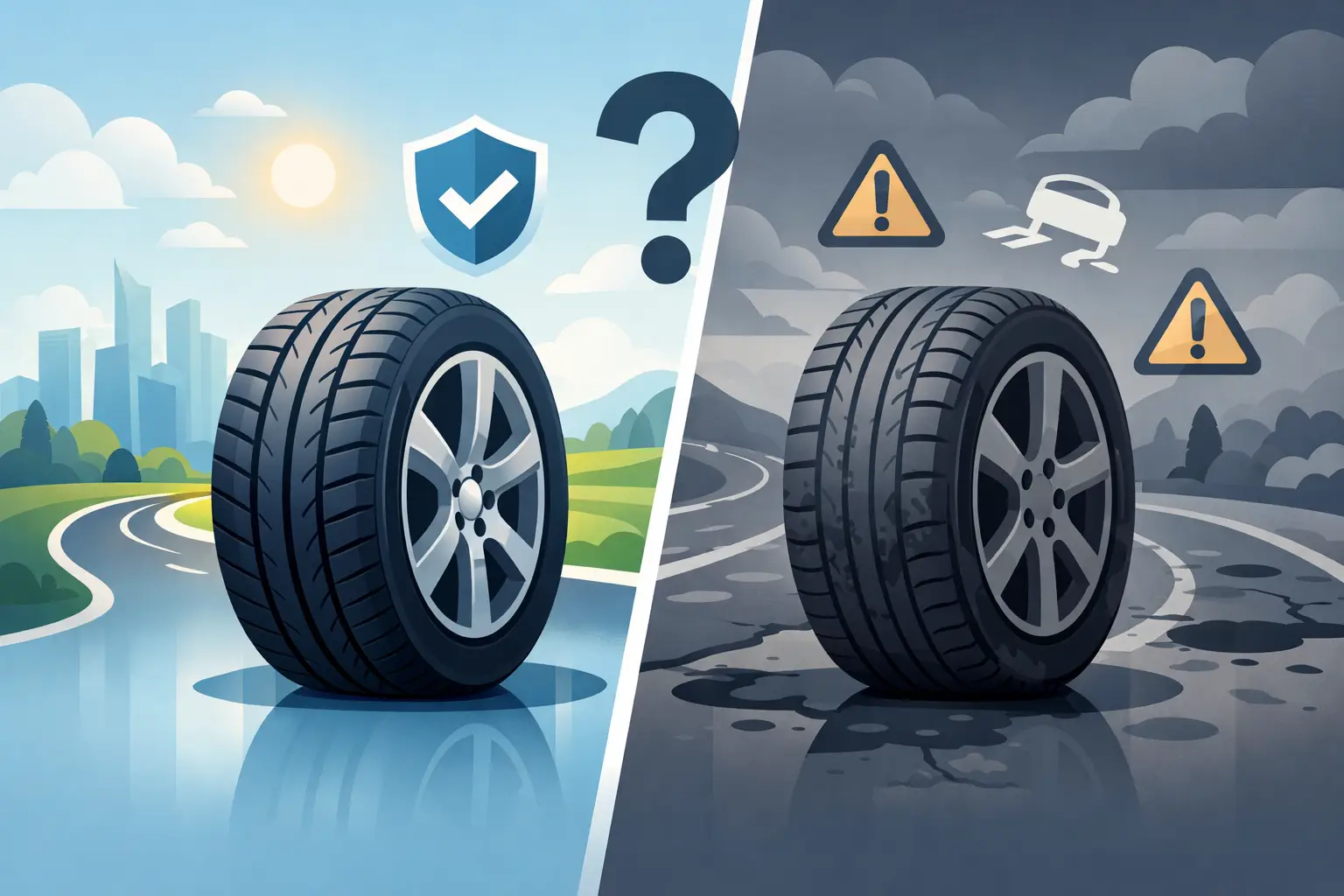

A kerb strike, deep pothole or sudden loss of pressure can damage a tyre where it is least forgiving: the sidewall. Knowing how to spot tyre sidewall damage could prevent a dangerous blowout, an unexpected roadside stop or further damage to your wheel. If the tyre looks wrong, feels different when driving or has taken a hard impact, do not assume it is safe because it is still holding air.
The sidewall is the tyre’s flexible outer section between the tread and the wheel rim. Unlike the tread area, it has very little protection against impacts. Damage here often affects the tyre’s internal structure, and that is not something a plug, sealant or simple puncture repair can put right.
How to Spot Tyre Sidewall Damage
Start with a visual check when the vehicle is parked safely on level ground. Turn the steering wheel to expose the front tyres, then inspect the outside and inside-facing sidewalls as far as you can. Use a torch if you are checking in poor light, at night or in a car park.
The clearest warning signs are a bulge, deep cut, crack or exposed tyre cords. A bulge may look like a raised lump, blister or egg-shaped swelling in the rubber. It means the internal cords may have broken, allowing the tyre to distort under pressure. Treat this as an immediate stop-driving issue, even if the tyre has not gone flat.
Look closely for these signs:
- A lump, bubble or bulge on the sidewall
- A split, gouge or cut deep enough to show layers beneath the rubber
- White, fabric-like or metallic cords showing through
- Cracks that are deep, widespread or opening when the tyre is flexed
- A section of sidewall that looks crushed, scuffed heavily or misshapen after an impact
A light surface scuff from brushing a kerb is not always serious. It may only affect the outer rubber, particularly if there is no cut, swelling or loss of pressure. The difference matters, though: a shallow mark can be cosmetic, while a chunk missing from the sidewall can expose the casing beneath. If you cannot confidently tell which it is, have it inspected before your next journey.
Why Sidewall Damage Is More Serious Than a Tread Puncture
A nail through the central tread can sometimes be repaired after a proper inspection, depending on its position, size and the tyre’s condition. The sidewall is different. It continually bends as the tyre rotates, carries the vehicle’s load and absorbs shocks from the road.
Once the sidewall’s reinforcing cords are damaged, the tyre can no longer perform as designed. Driving on it may cause the damaged area to expand, split or fail suddenly. Adding air might make the tyre appear normal for a short time, but it will not restore its strength.
This is why a tyre with a sidewall bulge, exposed cords or a deep cut normally needs replacement rather than repair. It is a cost drivers do not want, but replacing one unsafe tyre is far better than risking a loss of control at speed or being stranded on a busy road.
Check After Potholes, Kerbs and Tyre Pressure Warnings
Sidewall damage is often caused by one clear event. You may feel a sharp jolt after hitting a pothole, catch a kerb while parking, or clip a raised edge while avoiding traffic. Stop when it is safe to do so and inspect the tyre rather than waiting for the next fuel stop.
A hard impact can also bend or crack a wheel, so check for a damaged rim edge as well as tyre marks. If the steering begins pulling, the car vibrates, the ride feels unusually harsh or a tyre pressure warning light comes on after an impact, take the signs seriously. These symptoms do not always mean sidewall damage, but they are good reasons to stop and check.
Pressure loss can be slow. A tyre may look broadly inflated but still be below its recommended pressure, especially on a heavier SUV, van or loaded caravan. Check pressures when tyres are cold and use the vehicle manufacturer’s recommended settings, not the maximum pressure printed on the tyre sidewall.
Do Not Miss Damage on the Inner Sidewall
The visible outer sidewall is only half the picture. Damage can occur on the inside-facing sidewall too, particularly after driving through a pothole or after a tyre has been driven while under-inflated.
If safe access is limited, do not put yourself at risk trying to inspect underneath the vehicle or beside moving traffic. Move to a safer place, call for assistance or arrange a professional inspection. A mobile technician can check the full tyre, wheel and valve at your home, workplace or roadside location.
Driving while the tyre is very low can create a different type of internal sidewall damage. The tyre flexes excessively and can be pinched between the wheel rim and road surface. Sometimes the external signs are subtle, which is why a tyre that has been run flat or nearly flat should be assessed even after it has been reinflated.
When You Must Stop Driving Immediately
Do not continue driving if you see a bulge, cords, a deep sidewall cut or a tyre that is rapidly losing air. Pull over gradually in a safe location, avoid harsh braking and switch on your hazard lights if needed. Do not drive to a garage on a visibly damaged sidewall simply because it is nearby.
If you have a usable spare wheel and can change it safely away from traffic, it may get you moving again. Many newer vehicles have no spare, however, and tyre sealant kits are not a solution for sidewall splits or structural damage. They are designed for limited puncture situations in the tread area and can make a later inspection more difficult.
On a motorway or other fast road, keep yourself away from passing traffic. Move behind a safety barrier where possible and arrange recovery or mobile tyre assistance. Your safety comes before saving a few minutes.
Can You Drive With a Scuffed Tyre Sidewall?
It depends on the depth and extent of the damage. A minor rub that has only marked the outer surface, with no cracking, missing rubber, bulging or exposed material, may not require immediate replacement. Even then, it is sensible to monitor it and ask for an inspection if you are unsure.
Do not judge damage by appearance alone after a severe impact. The tyre’s casing can be compromised beneath a fairly ordinary-looking mark. Equally, not every tyre with superficial kerbing needs to be replaced. The right answer comes from checking whether the structural layers have been affected, not from guessing based on the size of the scuff.
A Quick Routine That Can Save a Call-Out
Make a tyre check part of washing the car, loading the van or setting off on a longer trip. Walk around the vehicle, look for cuts and bulges, and check that no tyre appears noticeably lower than the others. Pay extra attention after parking against high kerbs, travelling on rough roads or carrying heavy loads.
Also check tread depth, uneven wear and objects lodged in the tread. These are separate issues, but they can point to incorrect tyre pressures, wheel alignment problems or a developing puncture. Catching a problem early gives you more options and reduces the chance of an emergency stop during a commute, school run or delivery round.
If you find a suspicious mark, take a clear photograph before touching or inflating the tyre. It can help a technician understand what has happened, particularly if the damage changes or the tyre loses pressure before they arrive.
Fast Help Where You Are
A damaged sidewall is not a wait-and-see problem when there is a bulge, cut or exposed cord. Falcon Mobile Tyres Fitting provides tyre inspection and replacement at the roadside, at home or at work across South East London and Kent, helping you avoid the risk and inconvenience of driving on a tyre that may fail. Call us now if you are unsure – a quick professional check is the safer choice than hoping the tyre will hold for one more journey.
Your tyres are the only part of the vehicle in contact with the road. When the sidewall shows a serious warning sign, stop, get it checked and get back on the road with confidence.