A puncture rarely happens at a convenient time. You may be on the school run, parked outside work, carrying tools between jobs or heading home late through South East London or Kent. This guide to roadside puncture repair explains the safe actions to take first, what not to do, and when it is time to call for professional help rather than risk further damage.
1. Get off the road safely before checking the tyre
If you feel the steering pull, hear a repeated thudding sound or receive a tyre-pressure warning, ease off the accelerator and avoid sudden braking. Hold the steering wheel firmly, indicate early and move to a safe place away from moving traffic. A lay-by, car park or quiet side road is far better than stopping on a narrow, busy route.
Switch on your hazard lights once you are stationary. Apply the handbrake, select park or first gear, and ask passengers to stand somewhere safe if the location allows. On a motorway, do not attempt a roadside wheel change unless you are safely off the carriageway and well away from traffic. Use an emergency refuge area where possible and seek assistance.
Do not keep driving simply because the tyre still appears to hold some air. Even a short distance on a deflated tyre can destroy its internal structure, damage the wheel and turn a repairable puncture into a full tyre replacement.
2. Check whether it is a puncture, pressure loss or tyre damage
Once you are safely parked, inspect the tyre without placing yourself in danger. Look for a nail, screw, sharp object, deep cut, bulge or split in the sidewall. You may also see the tyre sitting low against the road, a visibly flattened section, or damage to the wheel rim.
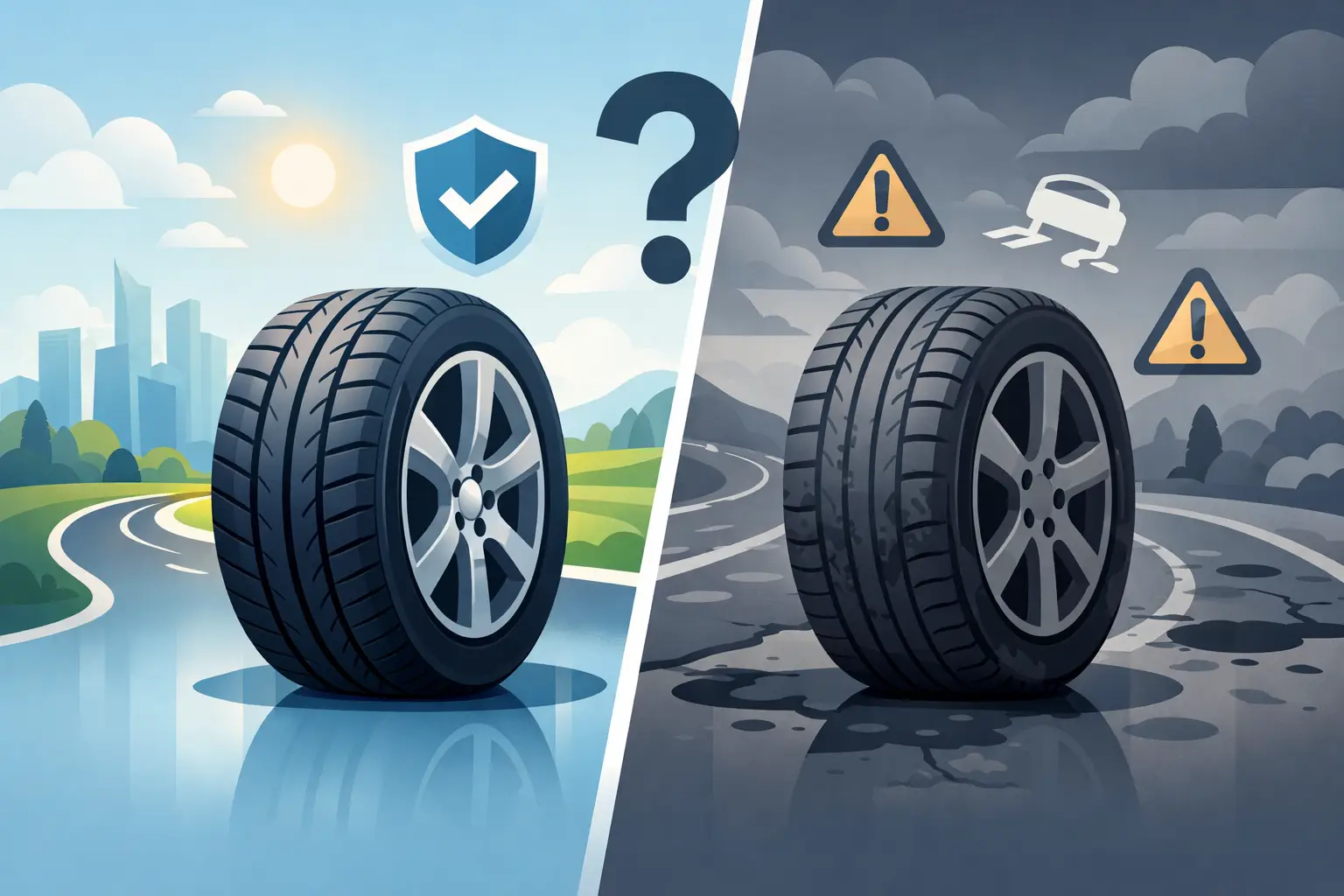
A puncture in the central tread area is sometimes repairable. A screw in the shoulder of the tyre, damage to the sidewall, a large hole or a tyre driven while flat is usually a different matter. Those faults often require replacement because the tyre may no longer be structurally safe.
Do not pull out a nail or screw at the roadside. It may be slowing the air loss, and removing it can leave you with a fully flat tyre before help arrives. Take a clear photo if you can do so safely. It helps a mobile tyre technician understand the likely issue before attending.
3. Do not rely on a temporary repair for longer than necessary
Many newer cars have a tyre inflation kit instead of a spare wheel. These kits normally use sealant and a compressor to provide a temporary way to reach a repairer. They can be useful, but they are not suitable for every puncture.
Sealant may not work on large holes, sidewall damage, a tyre that has come away from the rim, or a tyre that has been driven flat. It can also make a later repair more complicated. Follow your vehicle handbook exactly, including the speed limit and maximum distance stated for the kit. Do not treat it as a permanent fix or continue with normal motorway driving.
If you have a spare wheel, check its condition and pressure before fitting it. A space-saver spare is designed for temporary use, usually at a reduced speed, and should be replaced or removed as soon as practical. A full-size spare is more flexible, but it still needs to be correctly inflated and securely fitted.
4. Only change the wheel if the location and equipment are safe
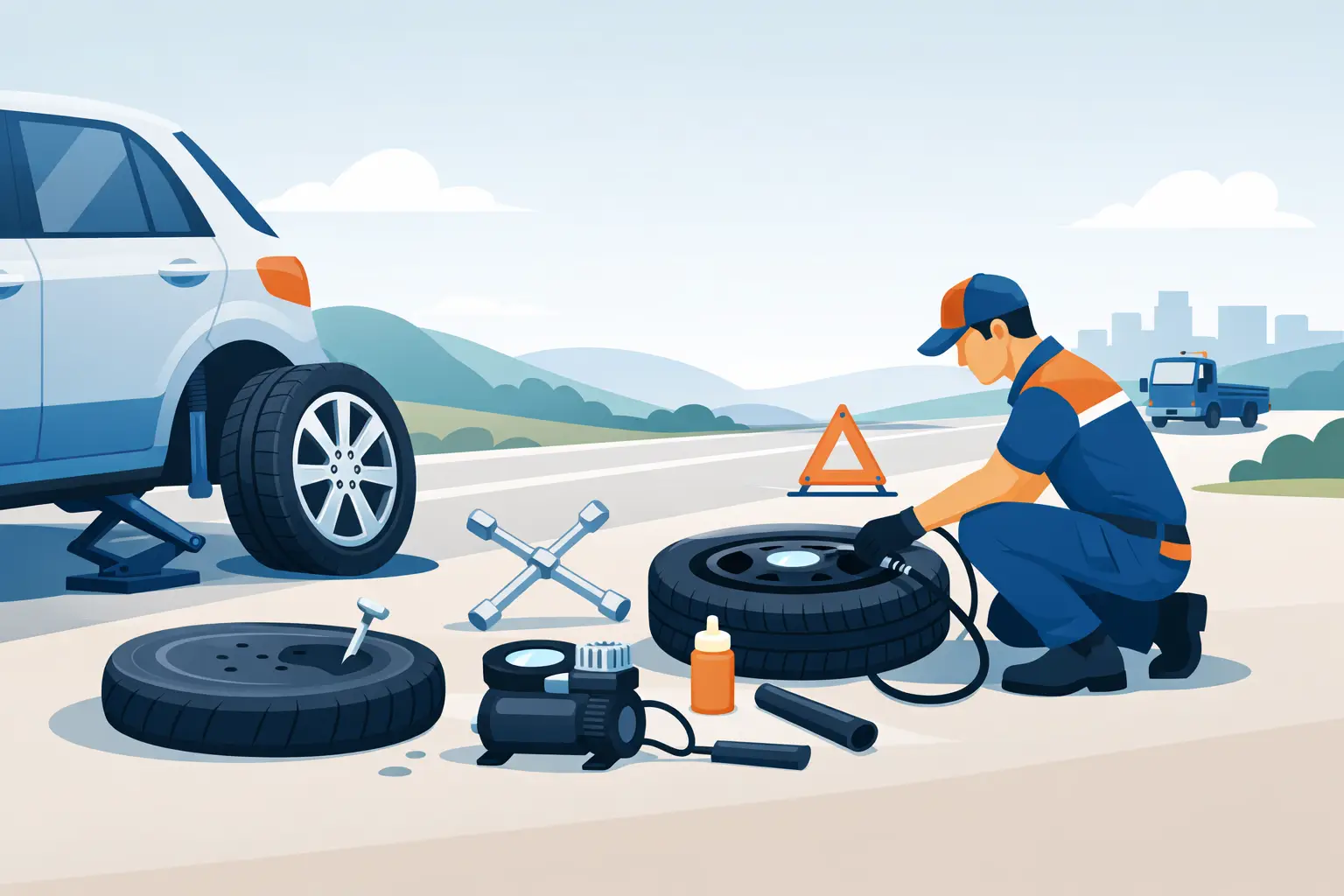
A roadside wheel change is not automatically the best option. It depends on the traffic, weather, surface, visibility and your confidence using the correct jacking points. Never jack a vehicle on soft ground, a slope or an unstable surface. Never work on the traffic-facing side of a vehicle when another option is available.
If conditions are safe, use the vehicle handbook for the exact process. Keep the locking wheel nut key handy, as many alloy wheels cannot be removed without it. If the key is missing, damaged or seized, forcing the wheel nuts can cause expensive damage and leave you stranded for longer.
For many drivers, especially on a busy road or when travelling with children, calling a mobile tyre service is the safer and faster choice. A technician can assess the puncture, remove the wheel with the right equipment and fit or repair the tyre at your location.
5. Know when roadside puncture repair is possible
A professional tyre repair is not just a plug pushed into a hole. The tyre needs to be removed from the wheel and inspected internally. This is how a technician checks for hidden damage caused by low-pressure driving, internal cracking, contamination or damage around the bead.
In general, repair may be possible when the puncture is in the repairable central tread area, the hole is small, the tyre has not been run flat, and there is no internal or sidewall damage. The tyre must also have sufficient legal tread depth and be otherwise in good condition.
Replacement is normally the right answer when there is a sidewall cut or bulge, a large or irregular hole, exposed cords, multiple close punctures, severe tread wear, or evidence that the tyre was driven while deflated. It can feel frustrating to replace a tyre over one small object, but tyre safety is not an area for shortcuts.
What about run-flat tyres?
Run-flat tyres can support the vehicle for a limited distance after pressure loss, but only if they are used within the manufacturer’s stated limits. They still need an inspection after a puncture. Some run-flat tyres can be repaired in limited circumstances, while others should be replaced. The decision depends on the tyre manufacturer’s guidance and the condition found during inspection.
6. Give the technician the information that speeds up the job
When you call for help, share your exact location, vehicle registration, tyre size if known, and a clear description of the problem. Let the operator know whether the tyre is completely flat, whether a nail or screw is visible, and whether you have a spare wheel or tyre sealant in the vehicle.
If you are in South East London or Kent, Falcon Mobile Tyres Fitting can attend at home, work, roadside or another safe location for puncture assessment, tyre repair or emergency replacement. Clear information helps the technician arrive prepared with suitable tyre options and the equipment needed for your wheel type.
Also mention any locking wheel nut issue before the visit. A missing locking wheel nut key does not always stop the job, but it requires the right removal method and should be planned for from the start.
7. Check the finished work before returning to normal driving
After a repair or replacement, confirm what work has been carried out and whether there are any temporary driving limits. A reputable technician will explain whether the tyre was repaired, replaced or if another tyre needs attention soon.
If a new tyre has been fitted, check that it is suitable for the axle and vehicle. Tyres should match in size, load rating and speed rating requirements. On some vehicles, differences in tread depth and tyre type can affect handling or drivetrain components, particularly on four-wheel-drive models. This is one reason an on-site expert assessment is useful rather than choosing the first tyre available.
Before setting off, make sure the warning light has been reset if required, the tyre pressures are correct, and any tools, wheel bolts or locking wheel nut key have been returned to the vehicle. Drive steadily for the first few miles and pay attention to vibration, pulling or warning lights.
Prevent the next puncture where you can
Not every puncture is avoidable, particularly after driving through building work, kerbside debris or poorly maintained roads. Regular checks still make a real difference. Check tyre pressures at least monthly and before long journeys, inspect the tread for embedded objects, and avoid mounting kerbs where possible. Underinflated tyres flex more, wear faster and are more vulnerable to damage.
Keep your locking wheel nut key, tyre inflation kit or spare-wheel tools in their proper place. When a puncture happens, knowing exactly where those items are can save valuable time. If the tyre is unsafe, the road is busy or you are simply unsure, stay clear of the carriageway and call for professional roadside support. Getting home safely matters more than attempting a rushed repair.