A damaged tyre can turn a normal school run, commute or delivery route into a roadside problem within seconds. This guide to emergency tyre replacement explains what to do first, when a tyre can be repaired and when replacement is the only safe option. The priority is simple: protect yourself, protect your vehicle and get the right help without taking unnecessary risks.
Start with safety, not the wheel
If you feel a sudden pull through the steering wheel, hear repeated flapping, or receive a tyre-pressure warning, reduce speed gradually. Avoid harsh braking or sudden steering, especially on a motorway, wet road or busy London junction. Hold the steering wheel firmly, indicate when safe and move to the safest available stopping point.
On a motorway, aim for an emergency refuge area where possible. If you have no choice but to stop on the hard shoulder, pull over as far left as you can, switch on your hazard lights and leave the vehicle from the left-hand side if it is safe to do so. Get behind a barrier where one is available. Do not attempt to change a tyre beside fast-moving traffic.
On a residential street, driveway, workplace car park or quiet roadside, give yourself room to assess the situation. Apply the handbrake, select park or first gear, switch on hazard lights and keep passengers away from the vehicle. A tyre that looks only slightly soft may still be unsafe to drive on, particularly if the sidewall has been damaged.
Check what has actually failed
Not every flat tyre needs an immediate replacement. A small nail or screw in the central tread area may sometimes be suitable for a professional puncture repair. The tyre must be removed and inspected properly before that decision is made. A quick plug pushed in from the outside is not a full safety assessment.
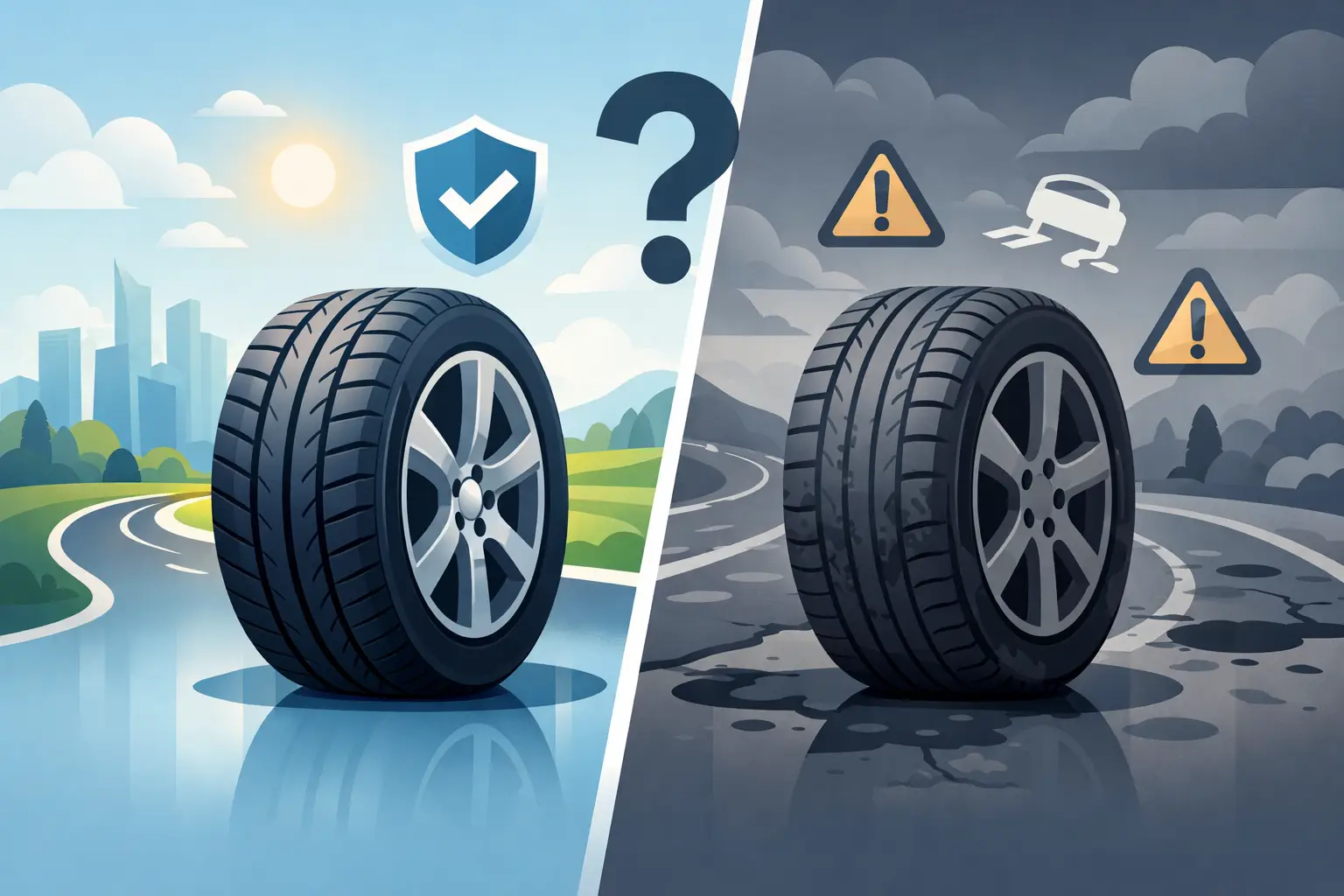
Emergency replacement is usually required where there is a split, bulge, deep cut, exposed cords, severe shoulder damage or a puncture in the sidewall. It is also the likely outcome if the tyre has been driven while flat. Driving on an underinflated or flat tyre can damage its internal structure even when the outside appears intact.
Look for the obvious signs, but do not put your hands close to damaged rubber or attempt to remove a lodged object. Leaving a nail or screw in place can slow the loss of air until a technician arrives. If the tyre is visibly shredded, the wheel rim is touching the ground, or the vehicle is leaning heavily, do not drive it any further.
Can you use the spare wheel?
A serviceable full-size spare can get you moving, provided it is correctly inflated and compatible with the vehicle. Check the sidewall for cracks, age-related deterioration and the correct pressure before relying on it. Many drivers only discover that a spare is flat when they need it most.
Space-saver spare wheels are different. They are intended for short-term, lower-speed use only and normally carry a maximum-speed warning on the tyre itself. They are useful for getting to a safe location or arranging a proper replacement, but they should not become your everyday tyre.
Some newer vehicles have no spare wheel at all. They may have a sealant kit, run-flat tyres or neither. Sealant can occasionally help with a small tread puncture, but it will not repair a split sidewall, a large hole or a tyre that has come off the rim. It can also make a later repair more difficult. If you are unsure, arrange professional assistance rather than guessing.
When not to attempt an emergency tyre change
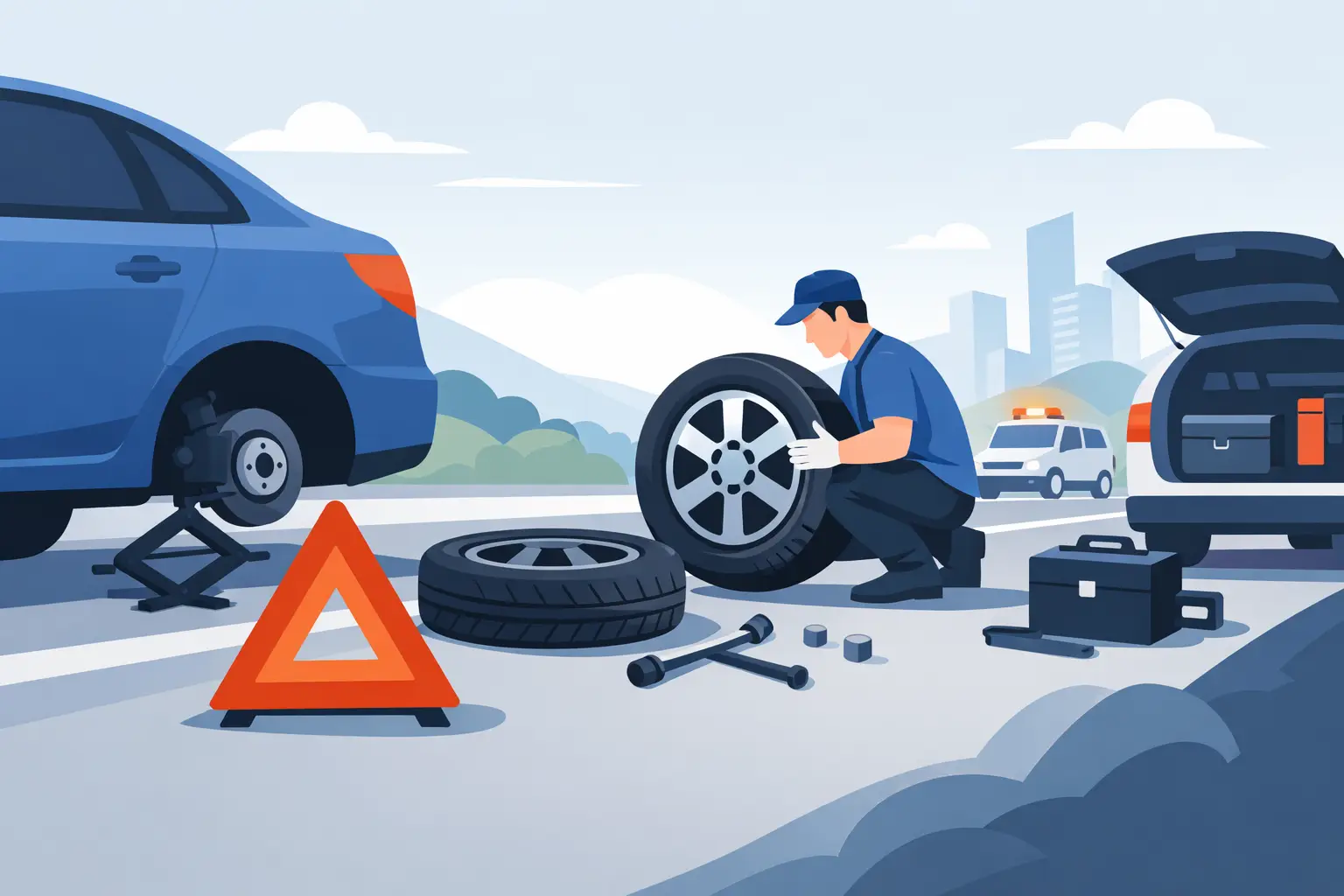
Changing a wheel is not simply a matter of having a jack and wheel brace. The ground needs to be stable and level, the correct lifting points must be used, and the wheel nuts may be extremely tight. Poor positioning can cause a vehicle to slip from the jack, damaging the car and putting anyone nearby at risk.
Do not attempt the job on a narrow live road, a motorway hard shoulder, soft ground, a steep slope or in poor visibility. The same applies if you have a locking wheel nut key missing or damaged. Forcing the wrong tool can damage the locking nut, wheel and hub, creating a more expensive problem.
For vans, SUVs, caravans and vehicles carrying tools or passengers, weight and load matter too. A heavily loaded vehicle may need a more careful inspection before it is lifted or driven on a replacement tyre. If the tyre failure happened after striking a pothole or kerb, the wheel and suspension should also be checked for damage.
What a mobile tyre technician needs from you
A fast response starts with clear information. When you call for help, have your exact location ready, including the road name, postcode, nearby landmark or motorway direction of travel. Explain whether you are at home, work, roadside or in a car park, and mention any access restrictions such as height barriers, locked gates or underground parking.
Your registration number is useful, but tyre size is even better if you can safely read it from an undamaged tyre. It is shown in a format such as 205/55 R16 91V. The technician also needs to know whether the tyre is completely flat, blown out, damaged by a kerb, or has a visible object in it.
Mention run-flat tyres, locking wheel nuts, alloy wheels, a missing spare and any wheel damage. This helps the technician arrive prepared with suitable equipment and available tyre options. It also supports clear pricing from the start, rather than surprises after the vehicle has been inspected.
Choosing the right replacement tyre in an emergency
The quickest option is not always the cheapest tyre available, and the cheapest option is not always right for your driving needs. A suitable emergency replacement must match the correct size, load rating and speed rating for the vehicle. These details affect handling, braking and insurance compliance.
Where possible, tyres on the same axle should be closely matched in size and tread pattern. On many vehicles, the better tyres should be fitted to the rear axle to support stability in wet conditions. However, the correct approach can depend on the vehicle, tyre type and the condition of the tyres already fitted, so a technician should assess it rather than follow a one-size-fits-all rule.
If you drive a high-mileage van, a family car or a vehicle that regularly travels on motorways, ask about options that balance availability, grip, lifespan and budget. An emergency does not remove the need for safe, legal tyres. The minimum UK tread depth is 1.6mm across the central three-quarters of the tread, around the complete circumference, but waiting until the legal limit is not always wise in heavy rain.
A guide to emergency tyre replacement at your location
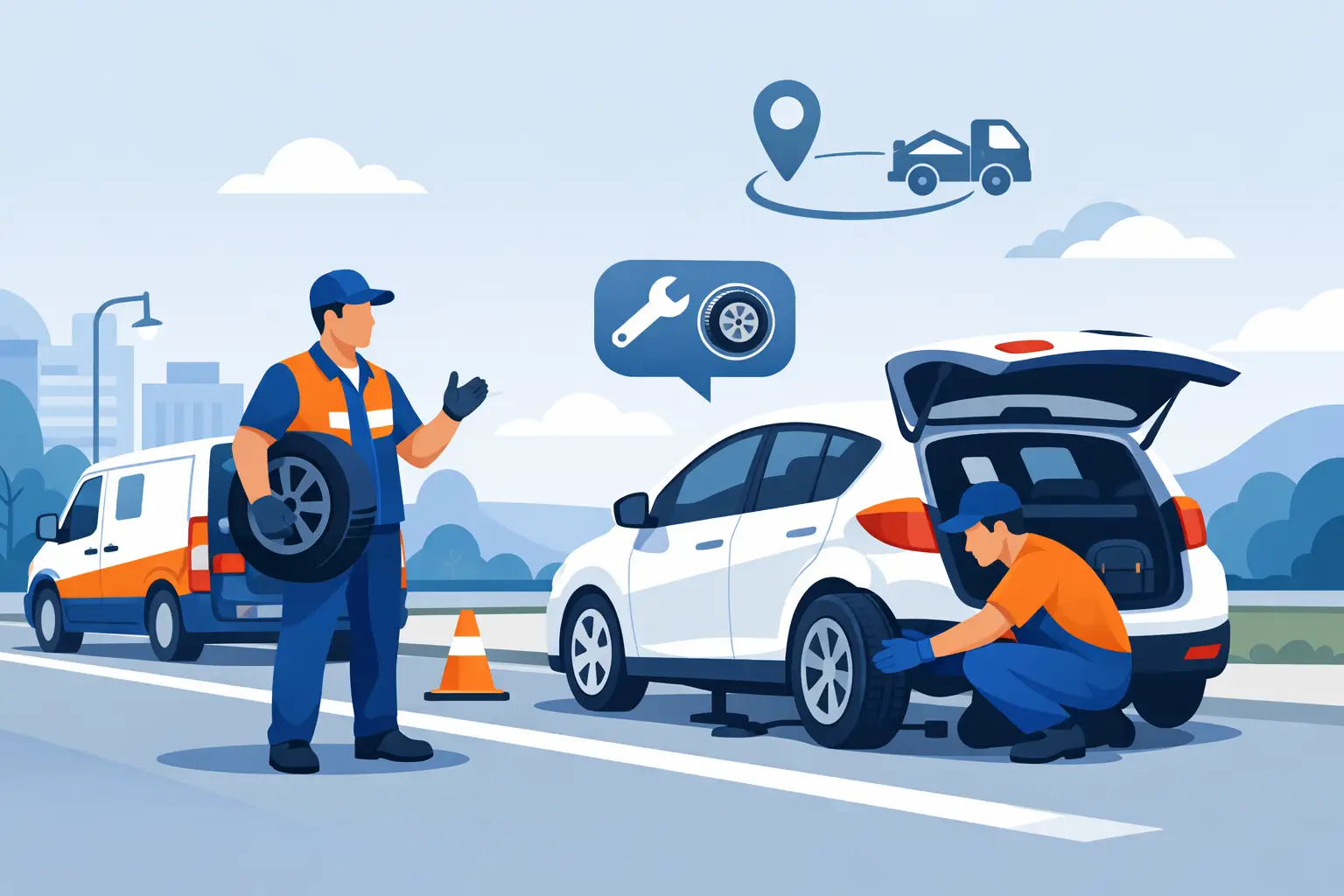
Mobile tyre fitting removes the need to drive on a damaged tyre or wait for a recovery lorry to take you to a garage. A technician can inspect the damage, remove the wheel, assess whether repair is safe, fit a suitable replacement and balance it at your location where conditions allow.
That is particularly useful when a puncture happens outside normal garage hours, before an early shift, during a family journey or while a van is needed for work. Falcon Mobile Tyres Fitting provides 24/7 mobile support across South East London and Kent for punctures, emergency tyre replacement, tyre repairs and locking wheel nut removal.
A professional fitting should include checks beyond simply putting a new tyre on the rim. The wheel should be inspected for damage, the tyre fitted correctly, inflation set to the appropriate pressure and wheel nuts tightened to the manufacturer’s specification. Ask if the old tyre will be taken away for responsible disposal and keep any invoice or fitting details for your records.
Avoid the next roadside call-out
Tyre emergencies are not always preventable, but regular checks reduce the chance of being caught out. Check pressures at least monthly and before a long journey, using the vehicle manufacturer’s recommended cold pressures. Include the spare wheel if you have one.
Inspect tread and sidewalls for nails, cuts, cracking and uneven wear. Uneven wear can point to incorrect pressure, wheel alignment or suspension issues. If your steering pulls to one side, the vehicle vibrates at speed or you are repeatedly losing pressure, get it checked before a small problem becomes a roadside failure.
Keep your locking wheel nut key in a known place, ideally with the vehicle toolkit, and make sure anyone who may drive the car knows where it is. If your car uses a tyre-pressure monitoring system, do not ignore repeated alerts. The warning may be caused by a slow puncture that can still be repaired if dealt with early.
A flat tyre is frustrating, but it does not have to ruin the day. Stop safely, avoid driving on damaged rubber and call for expert help as soon as you can. The right response now can save a wheel, protect your passengers and get you back on the road with far less disruption.