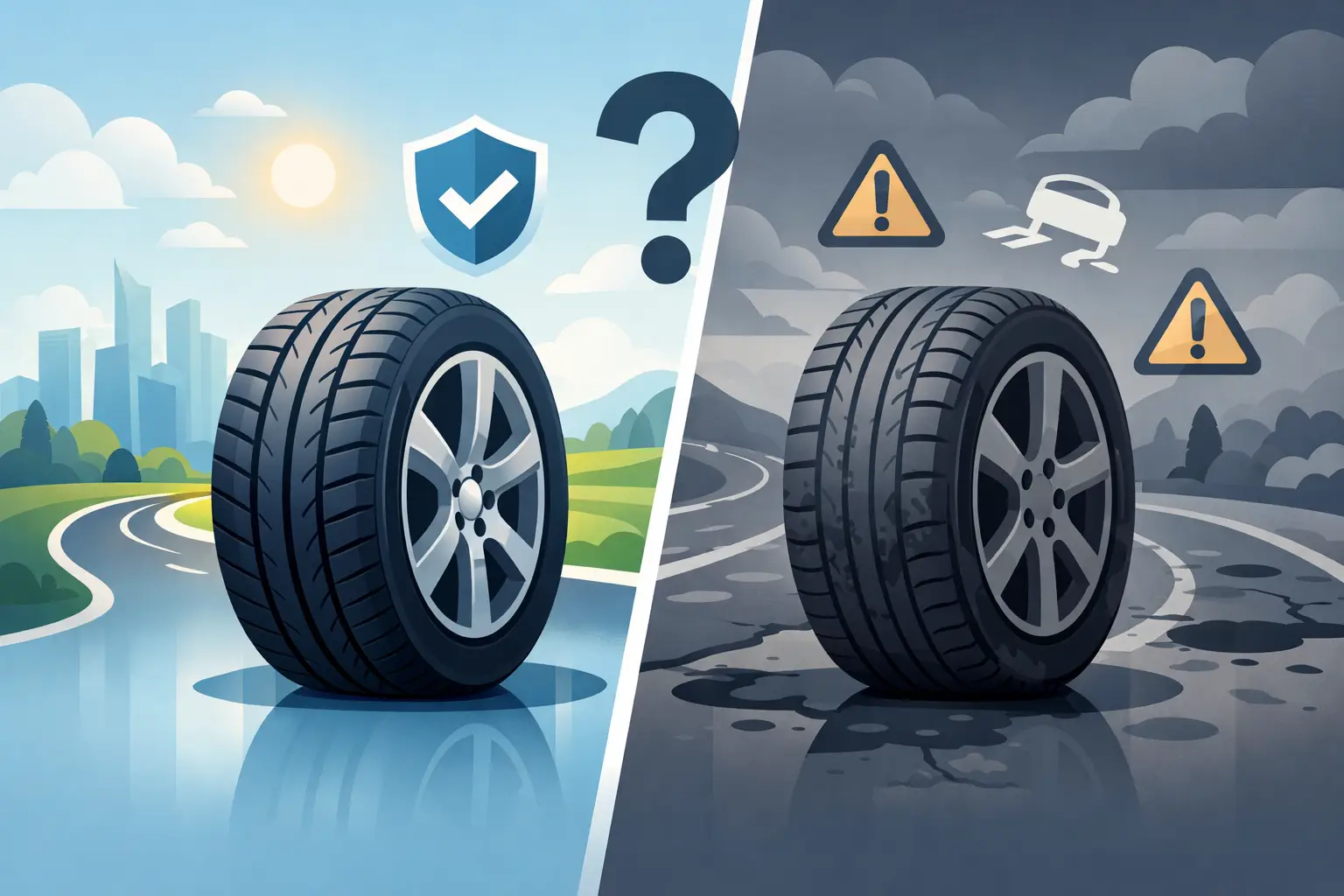
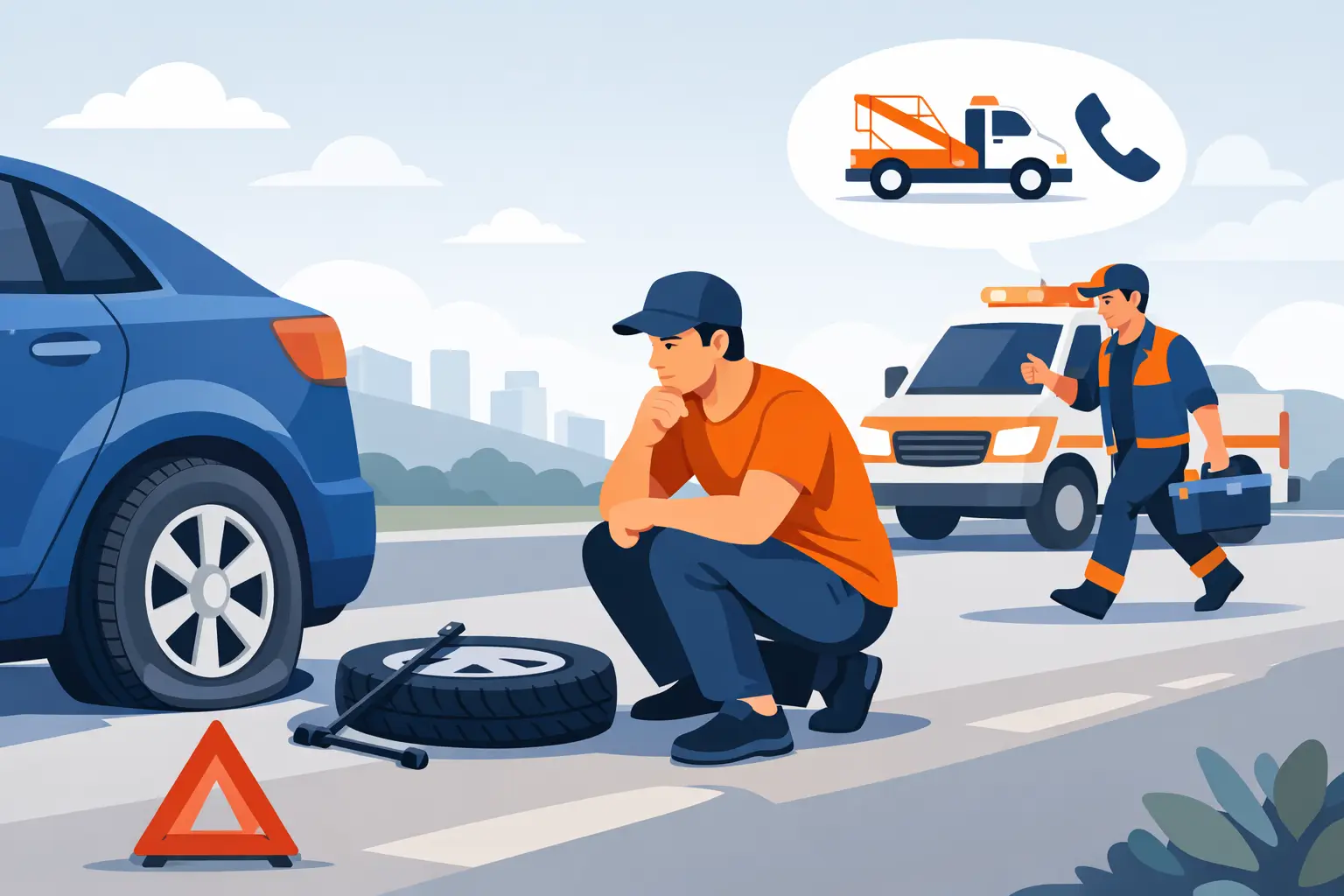
A flat tyre rarely happens at a convenient time. You may be leaving for work, collecting the children, heading to a customer or parked outside your home after a long day. Flat tyres can make your vehicle unsafe to drive and turn a simple journey into a stressful delay. The right response is to stop safely, avoid causing further damage and arrange professional help if you are unsure.
For drivers across South East London and Kent, a mobile tyre technician can come to your roadside location, workplace or driveway. That means no waiting for a recovery vehicle, no trying to fit a spare in poor conditions and no unnecessary trip to a garage.
What to do when you have a flat tyre
If you notice the steering pulling to one side, a sudden thumping sound, vibration through the wheel or a tyre pressure warning light, reduce speed gradually. Do not brake sharply or make sudden steering movements, particularly on a busy road or motorway.
Find a safe place to stop as soon as possible. Choose a level area away from moving traffic where you can leave the vehicle securely. Switch on your hazard lights, apply the handbrake and, if it is safe to do so, check the affected tyre without standing in a dangerous position.
A tyre can look completely flat, or it may only have lost some pressure. Either way, do not assume it is safe to continue driving. A slow puncture can quickly become a fully deflated tyre, while driving on a flat can damage the tyre walls and the wheel itself.
If you are on a motorway, do not attempt a roadside tyre change unless you are safely away from traffic. Move to an emergency area where possible, leave the vehicle only when it is safe and seek assistance. Your safety comes before getting moving again.
Why you should not drive on flat tyres
Even a short journey on a deflated tyre can turn a repairable puncture into a costly replacement. When there is little or no air pressure inside the tyre, the sidewall is crushed between the road and the wheel rim. This weakens its internal structure, which cannot always be seen from the outside.
Driving on a flat tyre can also bend or crack the alloy wheel, damage the valve and affect handling. On a van or fully loaded vehicle, the risk is greater because of the extra weight carried by the tyres. If the tyre has come off the bead or the sidewall has split, it will need replacing rather than repairing.
There are limited exceptions. Some vehicles have approved run-flat tyres designed to travel a restricted distance at a reduced speed after pressure loss. However, the permitted distance and speed vary by tyre and vehicle manufacturer. Do not rely on a run-flat tyre unless you know its condition and the vehicle guidance confirms it is safe.
Can a puncture be repaired?
A puncture repair may be possible when the damage is small, located in the central tread area and the tyre has not been driven while flat. A technician will remove the wheel, inspect the tyre internally and check for hidden damage before confirming whether a safe repair can be completed.
A repair is usually not suitable if the puncture is in the shoulder or sidewall, if there is more than one nearby puncture, or if the tyre has exposed cords, cracking, bulges or serious wear. Tyres close to the legal tread limit may also be better replaced, particularly if they are already ageing or unevenly worn.
Temporary sealant kits can help in certain situations, but they are not a guaranteed fix. Many kits cannot repair larger holes, sidewall damage or a tyre that has come away from the wheel. If sealant has been used, tell the technician. The tyre still needs a proper inspection before it is trusted for normal driving.
Common causes of a flat tyre
Most flat tyres are caused by punctures from nails, screws, sharp metal or broken debris on the road. Construction areas, industrial estates and poorly maintained routes can increase the chance of picking up debris, but a puncture can happen anywhere.
Kerb damage is another common cause. A hard impact while parking or avoiding traffic can damage the tyre sidewall or crack an alloy wheel. Potholes can have the same effect, especially when the tyre pressure is already low.
Slow leaks are often less obvious. They can be caused by a damaged valve, corrosion around the wheel rim, a small tread puncture or a previous repair that has failed. If you are topping up the same tyre every few days or weeks, do not ignore it. The tyre needs checking before a minor leak becomes a roadside breakdown.
Mobile help for flat tyres at home, work or roadside
Changing a wheel is not always straightforward. Some vehicles have no spare tyre, only a limited-use space saver or a sealant kit. Locking wheel nuts may be missing their key, seized or damaged. Larger vans, SUVs and caravans can be difficult to manage without the right equipment.
Falcon Mobile Tyres Fitting provides on-site tyre repairs, replacement tyres, emergency fitting and locking wheel nut removal where appropriate. A technician can assess the damage at your location and advise clearly whether a safe repair is possible or a replacement is needed.
This is particularly useful when a flat tyre has left you stuck outside your home, at work, in a supermarket car park or on the roadside. You do not need to arrange transport to a tyre depot or risk driving on a damaged tyre. Call us now for a fast local response, clear pricing and professional tyre support where you are.
Before you call for tyre assistance
Having a few details ready helps the technician bring the right equipment and replacement tyre options. Your vehicle registration is useful, but check the tyre sidewall too if it is safe to do so. The tyre size is shown as a series of numbers and letters, such as 205/55 R16.
Explain where you are, whether the tyre is fully flat and whether you can see an obvious nail, split or wheel damage. Let the technician know if your vehicle has locking wheel nuts, a spare wheel, run-flat tyres or a tyre pressure monitoring warning. For vans and caravans, mention the vehicle type and load where relevant.
You do not need to diagnose the issue yourself. Clear information simply allows the mobile team to prepare properly and reduce delays when they arrive.
Reducing the risk of another flat tyre
Some punctures cannot be avoided, but routine checks make sudden tyre failure less likely. Check tyre pressures at least once a month and before long journeys, using the pressure recommended by the vehicle manufacturer. Check them when tyres are cold for the most accurate reading.
Look over the tread and sidewalls regularly, especially after hitting a pothole or kerb. Remove visible stones from the tread if they are loose, but do not pull out a nail or screw that appears to be causing a leak. Leaving it in place may slow the pressure loss until help arrives.
Tyres should have at least the legal minimum tread depth of 1.6mm across the central three-quarters of the tread, around the full circumference. In practice, replacing tyres before they reach that limit gives better wet-weather grip and more time to organise the work without an emergency.
A flat tyre does not need to derail your day. Stop safely, avoid driving on the damaged tyre and get it inspected by someone equipped to repair or replace it properly. Quick action protects your wheel, your safety and your plans for the rest of the day.