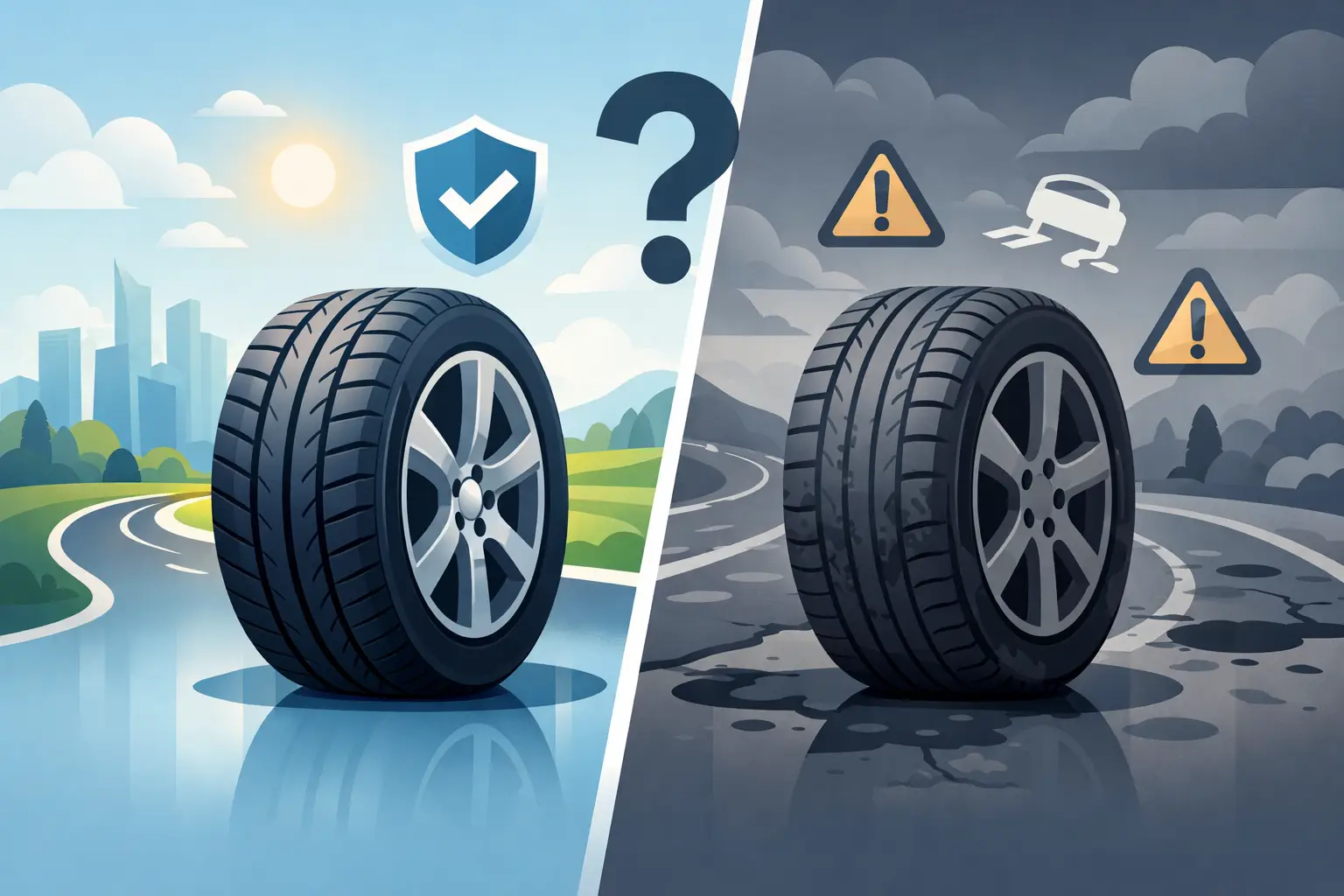
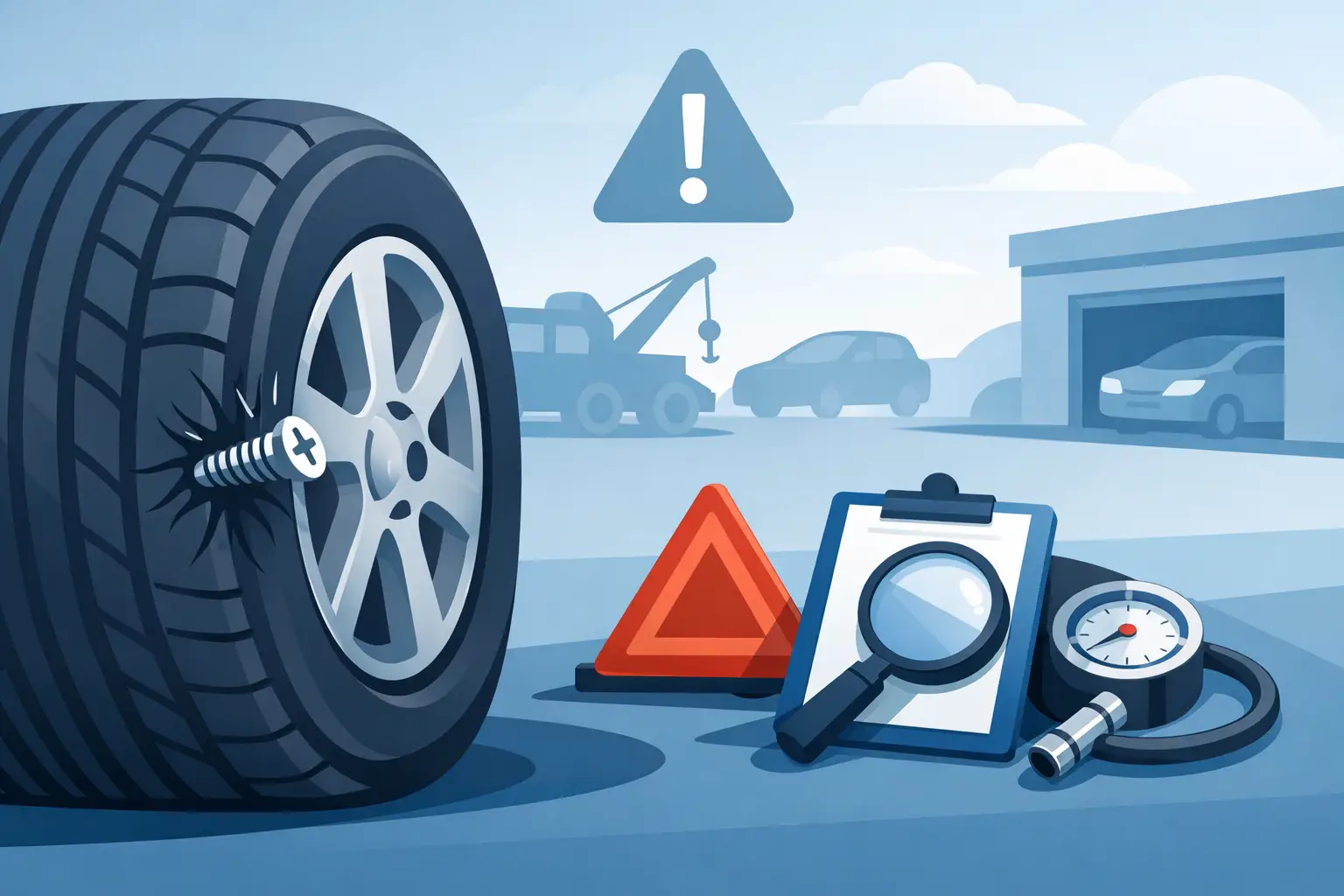
A screw in your tyre can turn a normal commute, school run or delivery round into a roadside problem quickly. So, can a screw damage tyres? Yes. Even a small screw can puncture the rubber, cause a slow loss of pressure and, if you keep driving, damage the tyre internally beyond a safe repair.
The good news is that a screw does not always mean you need a new tyre. Where it has entered, how long you have driven on it and whether the tyre has been run underinflated all matter. The key is to deal with it early rather than hoping it will hold until later.
Can a screw damage tyres straight away?
A screw can damage a tyre the moment it goes through the tread. It creates a path for air to escape, although the screw itself may temporarily plug the hole. That is why many drivers only notice the problem after the tyre pressure warning light appears, the vehicle starts pulling slightly, or the tyre looks low when parked.
The immediate damage may be limited to a small puncture in the central tread area. In that case, a professional repair may be possible. But the risk changes once the tyre loses pressure. Driving on a soft tyre makes the sidewalls flex far more than they are designed to. This creates heat and can damage the internal structure, even where the outside of the tyre still looks acceptable.
A tyre that has been driven flat or close to flat may need replacing. It is not worth gambling on a repair if the casing has been weakened.
Where the screw is makes a major difference
A screw in the middle section of the tread is generally the most favourable situation. Subject to a proper inspection, a technician may be able to remove the screw, check the inside of the tyre and carry out a suitable repair.
A screw in the shoulder or sidewall is more serious. The shoulder is the curved area between the main tread and the sidewall, and it flexes heavily when the vehicle is moving. Sidewall damage is not normally repairable because this part of the tyre supports the vehicle and continually bends under load.
Do not assume a screw is harmless because it is short or has not fully gone in. The angle of entry can be misleading, and the visible head tells you little about the depth of the puncture. A technician needs to inspect it properly.
Do not pull the screw out at the roadside
If you spot a screw while checking your tyres, leave it where it is. Removing it can turn a slow puncture into a rapid deflation, leaving you stranded where you are.
Instead, check the tyre pressure if you can do so safely. If the tyre is visibly low, the pressure warning light is on, or you can hear air escaping, do not continue driving. Park somewhere safe, away from moving traffic, and arrange assistance.
If the tyre still appears properly inflated and the screw is in the central tread, you may be able to travel a very short distance at low speed to a safe location. This is never a guarantee. Avoid motorways, high speeds, heavy loads and long journeys. Every mile on a punctured tyre increases the chance that a straightforward repair becomes a replacement.
Signs the screw has caused more than a simple puncture
A puncture is not always obvious. Watch for a tyre pressure monitoring warning, a tyre that needs regular topping up, unusual vibration, steering that pulls to one side or a thumping sound as you drive. These can also have other causes, but they should not be ignored.
Stop driving as soon as it is safe if the steering feels unstable, the tyre looks flat, there is a loud flapping noise, or the vehicle is difficult to control. Continuing can damage the wheel rim as well as the tyre. On a van carrying tools or stock, or a car loaded with family luggage, the added weight can make low-pressure damage happen faster.
If the screw has caused a sudden loss of pressure at speed, hold the steering wheel firmly, ease off the accelerator and let the vehicle slow gradually. Avoid sharp braking or sudden steering movements. Once you are safely stopped, assess the tyre from a protected position and seek professional help.
When can a screw puncture be repaired?
A repair depends on more than the hole itself. A technician will assess whether the puncture is in the repairable tread area, whether it is within an acceptable size, and whether the tyre has suffered internal damage from being driven while underinflated.
The tyre must also have enough safe, legal tread remaining. A repair is not the right answer if the tread is worn close to the legal minimum, the tyre has cracking or bulges, or there are previous repairs that affect its condition.
Professional tyre repair involves more than pushing a temporary plug into the hole from the outside. The tyre needs to be removed from the wheel so its interior can be inspected. This confirms whether the casing is sound and allows the puncture to be repaired correctly. A quick roadside plug may appear to solve the issue, but it does not replace a full safety check.
What about run-flat tyres?
Run-flat tyres can support the vehicle for a limited distance after pressure loss, but they are not invincible. Their reinforced sidewalls can hide damage that is not visible from the outside. The distance and speed you can travel depend on the tyre specification and vehicle manufacturer guidance.
If a screw is in a run-flat tyre, do not assume you can continue your journey as normal. Reduce speed, keep the distance to an absolute minimum and arrange an inspection. Many run-flat tyres require replacement after being driven with no pressure, although the final decision depends on their condition and the manufacturer’s guidance.
Why acting quickly can save you money
A screw caught early may mean a repair and a short delay. Leave it until the tyre is flat, and you could be facing a replacement tyre, possible wheel damage and a missed appointment or shift.
This is especially relevant for drivers who rely on their vehicle. A tradesperson’s van, a family car on the school run or a commuter’s vehicle does not need a tyre issue to become an all-day garage visit. Mobile tyre support brings the inspection, repair or replacement to your home, workplace or safe roadside location.
Falcon Mobile Tyres Fitting provides 24/7 assistance across South East London and Kent, helping drivers get a clear answer without unnecessary delay. A technician can assess the puncture on site, explain whether repair is suitable and fit a replacement if the tyre is not safe to keep in service.
Check the other tyres too
Finding one screw is often bad luck, but it is also a useful reminder to inspect all four tyres. Look for embedded nails, screws, cuts, bulges and objects caught in the tread. Check pressures when the tyres are cold and use the vehicle manufacturer’s recommended settings, not the maximum pressure printed on the tyre sidewall.
Correct pressure helps tyres wear evenly, improves handling and reduces the chance of serious damage if a puncture occurs. It also gives you a better chance of noticing a slow leak before it becomes an emergency.
A screw in a tyre is not something to ignore or diagnose by guesswork. Leave it in place, avoid driving on a low tyre and get it checked promptly. A fast, professional inspection is the safest way to protect your tyres, your wheels and the journey you still need to make.