A tyre blowout is one of the few vehicle faults that can change the feel of your car in a second. The steering may pull sharply, the vehicle can wobble, and the bang can make even an experienced driver panic. Knowing how to handle a tyre blowout safely gives you the best chance of keeping control, protecting your passengers and getting help without making the situation worse.
The first few seconds matter most. Do not try to solve the tyre problem while the vehicle is still moving. Your only job is to keep the car stable and move to a safe place when you can.
What to do the moment a tyre blows out – How to Handle a Tyre Blowout on the Road
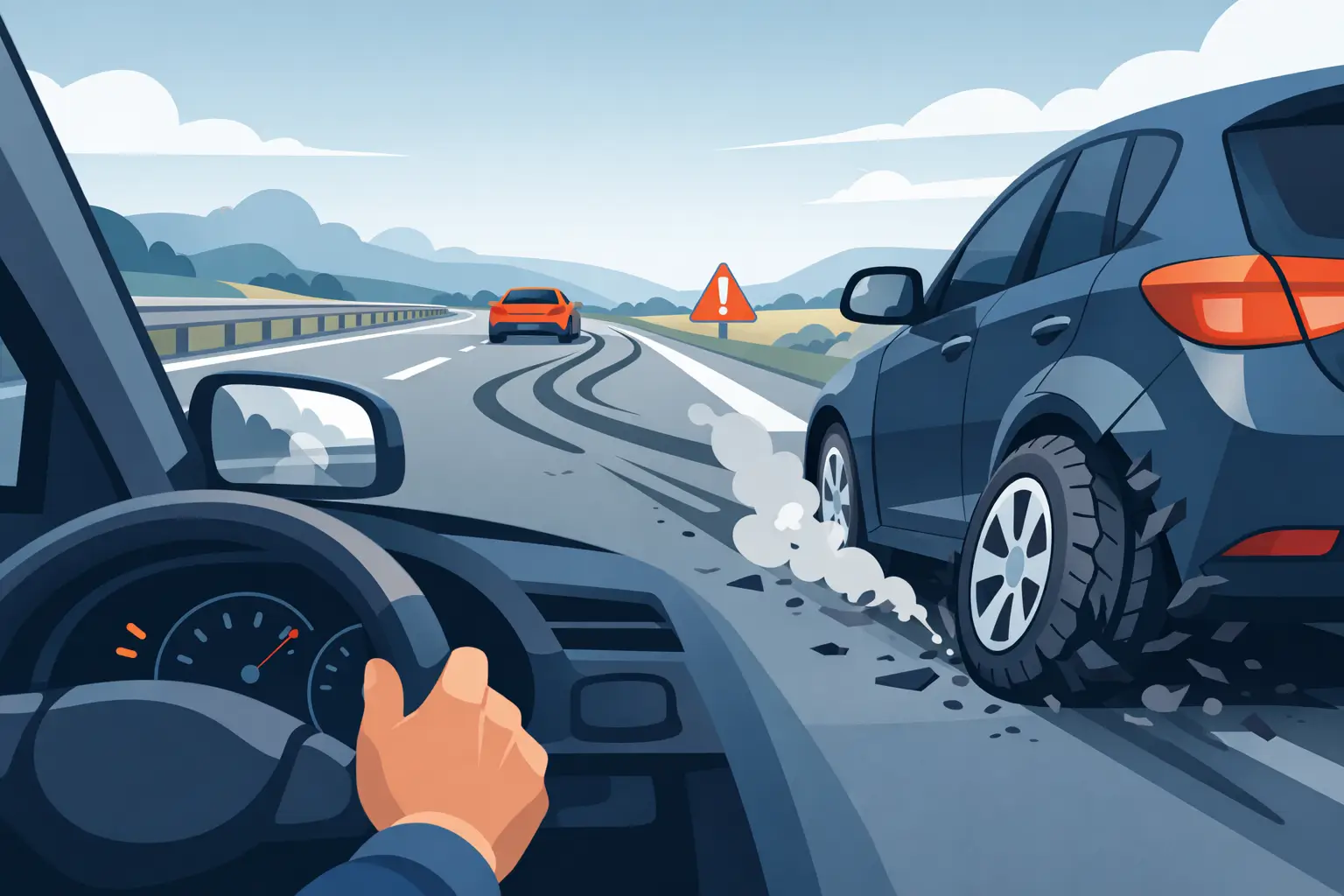
Keep both hands firmly on the steering wheel and look well ahead, not down at the dash or towards the damaged tyre. A front tyre blowout often pulls the steering towards one side. A rear tyre blowout may make the back of the vehicle feel loose or unstable. In either case, make small, controlled steering corrections and keep the vehicle travelling straight.
Ease off the accelerator gradually. Do not stamp on the brake pedal, make a sudden turn or use cruise control to slow the vehicle. Heavy braking transfers weight through the car and can make a loss of grip more difficult to control, particularly on a wet road or if you are carrying a full load.
Let the vehicle lose speed naturally, then brake gently once you feel it is stable. Indicate when it is safe to do so and move towards a suitable stopping place. This could be a lay-by, a car park, a quiet side road or a safe hard shoulder where one is available. Avoid stopping on a bend, beside fast-moving traffic, or where other drivers have little warning that you are there.
If you need to alert traffic behind you, use your hazard warning lights. On a motorway, hazards can be especially useful while you are slowing unexpectedly or moving towards a place of safety.
How to handle a tyre blowout safely after stopping
Once you are off the live carriageway, apply the handbrake, select park or first gear, and switch on your hazard lights. Take a moment before getting out. Check mirrors, assess passing traffic and make sure every passenger knows to stay clear of the road.
Do not inspect the tyre from the traffic side of the vehicle. If you are on a narrow road, a busy dual carriageway or a motorway, the danger from moving vehicles is usually greater than the danger from the tyre itself. If it is not safe to leave the car, remain belted in and call for assistance.
On a motorway, try to reach an emergency area, service station or exit rather than stopping in a live lane. If you have no choice but to stop in an emergency, move as far left as possible, turn on hazards and contact emergency services if you or your passengers are in immediate danger. Where it is safe to leave from the left-hand side, move behind a barrier and away from traffic. Never attempt a tyre change on the hard shoulder or in a live lane.
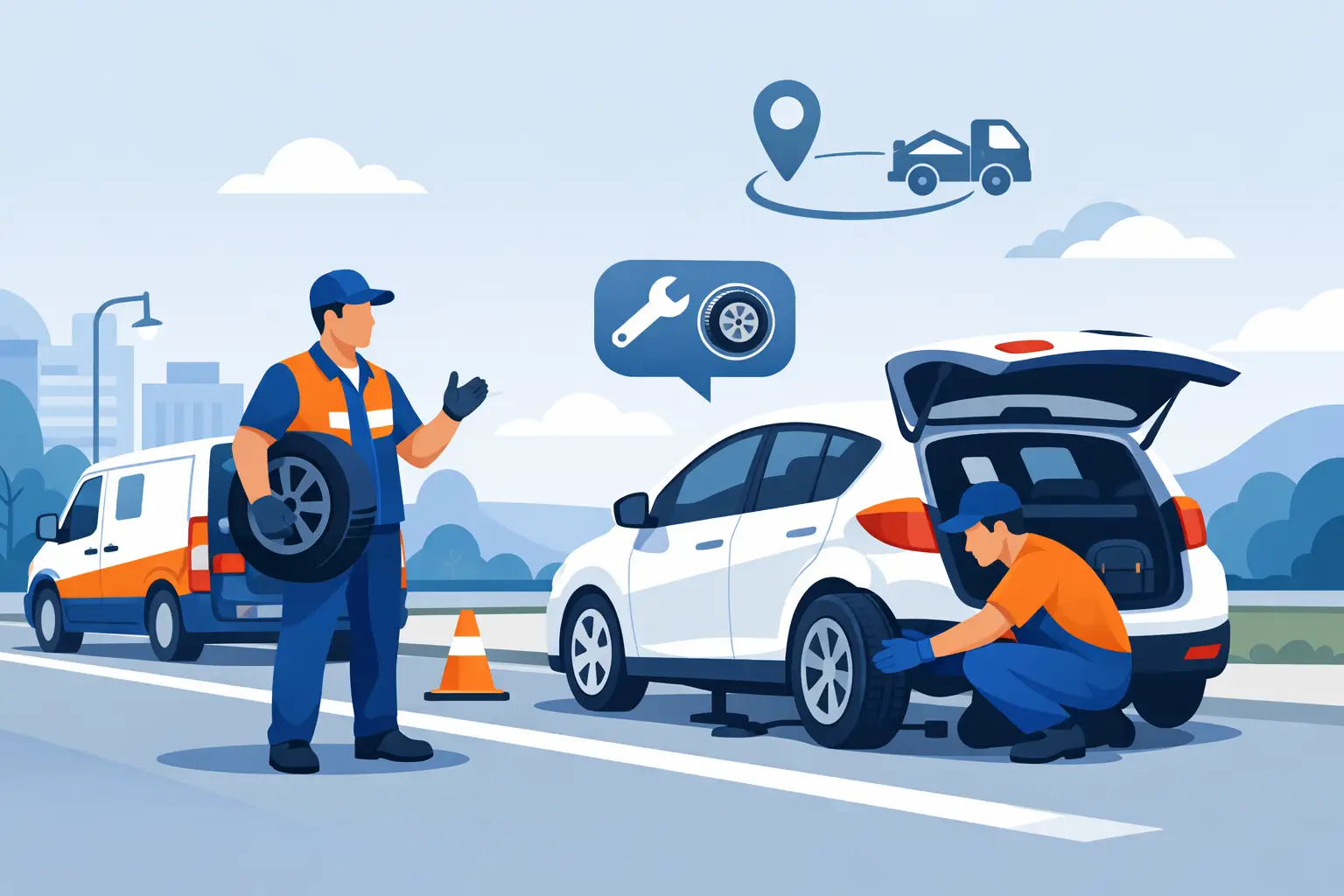
A mobile tyre technician can assess and replace a damaged tyre at your home, workplace or a safe roadside location. However, no responsible technician should work where passing traffic makes the job unsafe. Your location affects the safest next step.
Do not drive on a blown tyre
It can be tempting to drive slowly to the nearest garage, especially if you are close to home or late for work. That is rarely a good idea. A deflated tyre can quickly break down internally, damage the wheel rim and affect the vehicle’s handling. Driving on it may turn a straightforward tyre replacement into a more expensive wheel repair as well.
Run-flat tyres are different, but they still have limits. If your vehicle has run-flats, check the manufacturer’s guidance for the permitted distance and speed after a pressure loss. You should still reduce speed, avoid sudden manoeuvres and arrange an inspection as soon as possible. A run-flat tyre is not permission to carry on with a normal journey.
The same applies to a slow puncture that has finally gone flat. Even if there was no loud bang, a tyre that has lost pressure can overheat and fail. Treat a severely deflated tyre as a roadside safety issue, not something to deal with after the next appointment.
Can a blown tyre be repaired?
It depends on what caused the failure and how far the tyre has been driven while flat. A simple puncture in the central tread area may sometimes be repairable, provided the tyre has not suffered internal damage. A split sidewall, exposed cords, a large tear, a damaged bead or a tyre driven while deflated will normally require replacement.
A proper inspection matters because not all damage is visible from the outside. The technician will check the tread, sidewall, valve, wheel rim and the inside of the tyre where necessary. If a replacement is needed, the new tyre should match the vehicle’s required size, load rating and speed rating.
For vehicles with tyres of different wear levels, the best fitting position can also depend on the vehicle type and manufacturer guidance. Many vehicles benefit from having the pair with the deepest tread on the rear axle to help maintain stability in wet conditions. Your technician can advise based on the tyres already fitted and the condition of the remaining set.
Why tyre blowouts happen
Some blowouts are impossible to predict, such as striking sharp debris or a deep pothole. Others develop over time. Underinflation is a common cause because a soft tyre flexes more, builds heat and becomes more likely to fail, particularly at motorway speeds or with a heavily loaded car or van.
Overloading, worn tread, sidewall damage from kerbs, ageing rubber and incorrect tyre pressures all increase the risk. Vans, caravans and vehicles carrying tools or family luggage deserve extra attention because the load placed on each tyre can change significantly.
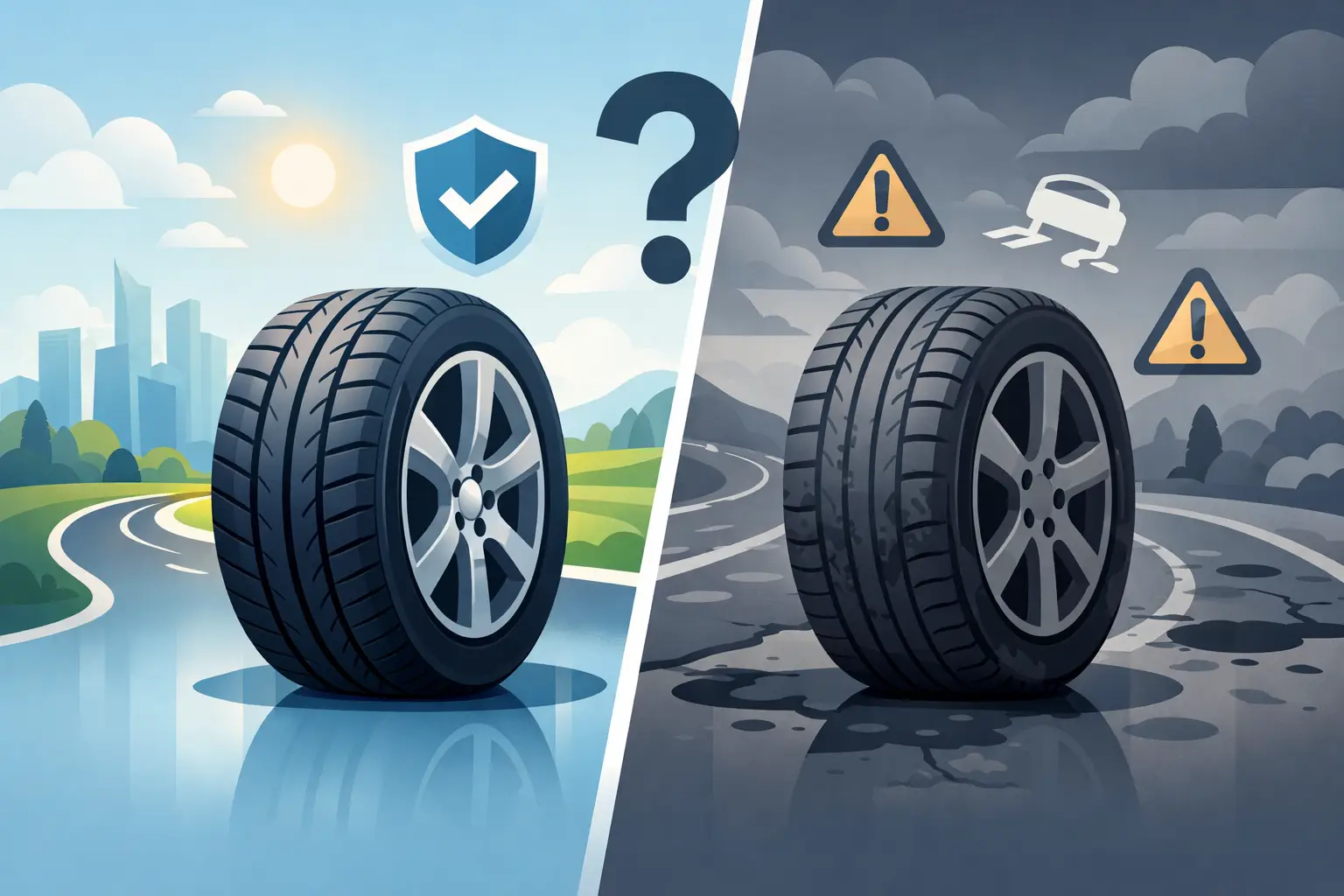
Before a long journey, check pressures when the tyres are cold and use the pressure figure for the load you are carrying. Look for cuts, bulges, cracking, embedded objects and uneven wear. A bulge in the sidewall is especially urgent, as it can indicate internal structural damage. Do not wait to see if it gets worse.
If you are carrying children, passengers or a heavy load
Keep your instructions short and calm. Ask passengers to remain seated with seat belts on until you have stopped safely. Children should stay in the vehicle unless you have reached a clearly safe place and can move them away from traffic without risk.
A loaded vehicle takes longer to slow down and may react more sharply to a tyre failure. This is particularly relevant for tradespeople in vans, families heading away for the weekend and caravan owners. Give yourself more distance, reduce speed steadily and avoid abrupt braking.
If luggage or equipment has shifted during the incident, do not try to rearrange it at the roadside unless you are in a secure location. The priority is always people, traffic and a safe recovery or tyre replacement.
How to Handle a Tyre Blowout on the Road? Getting back on the road without the garage visit
If you are safely parked in South East London or Kent, Falcon Mobile Tyres Fitting can send a technician to diagnose the problem and provide a practical next step, whether that is a puncture repair, emergency tyre replacement or help with a locking wheel nut. You do not need to risk driving on a damaged tyre or spend hours waiting at a garage.
When you call for help, have your location, registration number, tyre size if known, and a brief description of the damage ready. Mention whether you are on a busy road, at home, at work or in a car park. This helps the technician arrive prepared and confirms that the work can be completed safely at your location.
A blowout is unsettling, but calm driving and a safe stop make all the difference. Keep control first, protect your passengers second, and let an expert deal with the tyre once you are out of danger.